
المحتويات
أنقر على أي رابط أدناه لقراءة المعلومات ذات الصلة
١- الإنسحاب الإسرائيلي
٢- تأكيد الإنسحاب
٣- تسجيل خروقات الخط
٤- مزيد من التطورات
٥- زيادة عديد اليونيفيل
٦- الوضع في المنطقة من تموز الى تشرين الأول ٢٠٠٠
٧- خفض عديد اليونيفيل
٨- إعادة تشكيل قوة اليونيفيل
٩- الوضع في المنطقة من كانون الثانير ٢٠٠١ الى كانون الثاني ٢٠٠٢
١٠- الوضع في المنطقة من كانون الثاني ٢٠٠٢ الى كانون الثاني ٢٠٠٣
١١- الوضع في المنطقة من كانون الثاني الى تموز ٢٠٠٣
١٢- الوضع في المنطقة من تموز ٢٠٠٣ الى كانون الثاني ٢٠٠٤
١٣- الوضع في المنطقة من كانون الثاني الى تموز ٢٠٠٤
١٤- الوضع في المنطقة من تموز ٢٠٠٤ الى كانون الثاني ٢٠٠٥
١٥- الوضع في المنطقة من كانون الثاني الى تموز ٢٠٠٥
١٦- الوضع في المنطقة من تموز ٢٠٠٥ الى كانون الثاني ٢٠٠٦
١٧- إندلاع أزمة جديدة
١٨- مجلس الأمن يدعو الى إنهاء الأعمال العدائية؛ زيادة عديد اليونيفيل، توسيع الولاية
١٩- وقف الأعمال العدائية يصمد
٢٠- نتائج الحرب
٢١- قوة اليونيفيل المعززة تنتشر
في أوائل السبعينيات، تزايد التوتر على طول الحدود بين إسرائيل ولبنان، وخصوصاً بعد ترحيل العناصر المسلحة الفلسطينية من الأردن إلى لبنان. وتكثفت العمليات المسلحة الفلسطينية ضد إسرائيل والعمليات الإنتقامية الإسرائيلية ضد القواعد الفلسطينية في لبنان. وفي ١١ آذار من عام ١٩٧٨، أسفر هجوم مسلح في إسرائيل عن وقوع العديد من القتلى والجرحى في صفوف السكان الإسرائيليين، وأعلنت منظمة التحرير الفلسطينية مسؤوليتها عن هذا الهجوم. ورداً على ذلك، إجتاحت القوات الإسرائيلية لبنان ليلة ١٤-١٥ آذار، وبعد بضعة أيام إحتلت كامل الجزء الجنوبي من البلاد بإستثناء مدينة صور وضواحيها.
 |
| جنود حفظ السلام في الجنوب يرفعون علم الأمم المتحدة في الناقورة - ١٥ حزيران ١٩٧٨ |
في ١٥ آذار ١٩٧٨، قدمت الحكومة اللبنانية إحتجاجاً شديد اللهجة الى مجلس الأمن ضد الغزو الإسرائيلي، وذكرت أنه لا توجد لها أي علاقة بالعملية المسلحة الفلسطينية. في ١٩ آذار، تبنى المجلس القرارين ٤٢٥ (١٩٧٨) و ٤٢٦ (١٩٧٨)، اللذين يدعوان إسرائيل الى وقف أعمالها العسكرية وسحب قواتها من جميع الأراضي اللبنانية. كما قرر المجلس على الفور إنشاء قوة الأمم المتحدة المؤقتة في لبنان (اليونيفيل). ووصلت طلائع قوات اليونيفيل الى المنطقة يوم ٢٣ آذار ١٩٧٨.
نصّ القرار ٤٢٥ (١٩٧٨) على شرطين. أولاً، دعا مجلس الأمن الى الإحترام الصارم لوحدة وسيادة لبنان وإستقلاله السياسي داخل حدوده المعترف بها دولياً. ثانياً، دعا مجلس الأمن إسرائيل الى وقف أعمالها العسكرية ضد سلامة الأراضي اللنانية وسحب قواتها فوراً من جميع الأراضي اللبنانية.
كذلك قرّر مجلس الأمن، في ضوء طلب حكومة لبنان، أن ينشئ على الفور قوة الأمم المتحدة المؤقتة في جنوب لبنان. وأنشئت هذه القوة المؤقتة لثلاثة أهداف واسعة التحديد، وهي:
١- تأكيد إنسحاب القوات الإسرائيلية.
٢- إعادة السلم والأمن الدوليين.
٣- مساعدة حكومة لبنان على بسط سلطتها الفعلية في المنطقة.
في القرار ٤٢٦ (١٩٧٨)، وافق مجلس الأمن على تقرير الأمين العام حول تنفيذ القرار ٤٢٥ (١٩٧٨). على أن يتضمن التقرير، في جملة أمور، مبادئ توجيهية لعمليات اليونيفيل.
في حزيران ١٩٨٢، وبعد تبادلٍ لإطلاق النار في جنوب لبنان وعبر الحدود الإسرائيلية اللبنانية، إجتاحت إسرائيل لبنان مرة أخرى، ووصلت الى بيروت وحاصرتها. لمدة ثلاث
 |
| جنود حفظ السلام في الكتيبة الفيجية على نقطة تفتيش في القليلة - ١ ايار ١٩٨٠ |
سنوات، بقيت قوة اليونيفيل خلف الخطوط الإسرائيلية، وإقتصر دورها على توفير الحماية والمساعدة الإنسانية للسكان المحليين الى أقصى حد ممكن. في عام ١٩٨٥، نفّذت إسرائيل إنسحاباً جزئياً، ولكن أبقت السيطرة على منطقة في جنوب لبنان يشرف عليها الجيش الإسرائيلي وقوى الأمر الواقع اللبنانية، أو ما يسمى بـ ’جيش لبنان الجنوبي‘. وإستمرت الأعمال العدائية بين القوات الإسرائيلية والقوات المتعاونة معها من جهة، والمجموعات اللبنانية التي أعلنت عزمها على مقاومة الإحتلال الإسرائيلي من جهة أخرى.
على مرّ السنين، حافظ مجلس الأمن على إلتزامه سلامة أراضي لبنان وسيادته وإستقلاله، في حين أن الأمين العام واصل جهوده لإقناع إسرائيل بمغادرة المنطقة المحتلة. إسرائيل أكدت أن المنطقة المحتلة هي ترتيب مؤقت تحكمه مخاوفها الأمنية. لبنان طالب بإنسحاب إسرائيل، وإعتبر الإحتلال غير قانوني ويتعارض مع قرارات الأمم المتحدة.
ورغم أن اليونيفيل مُنعت من تنفيذ تفويضها، فإن القوة إستخدمت أقصى جهودها للحد من النزاع، والمساهمة في الإستقرار في المنطقة وحماية سكان المنطقة من أسوأ آثار العنف. وعلى الرغم من الصعوبات، مدد مجلس الأمن مراراً ولاية اليونيفيل بناءً على طلب من حكومة لبنان وبناءً على توصية من الأمين العام.
 |
| إطفاء الحرائق المندلعة في مقر الكتيبة الفيجية في قانا بعد القصف الإسرائيلي - ١٨ نيسان ١٩٩٦ |
حدث مأساوي وقع في منطقة إنتشار القوة في نيسان ١٩٩٦ عندما لقي أكثر من ١٢٠ مدنياً لبنانياً مصرعهم بالنيران الإسرائيلية وجُرح نحو ٥٠٠ شخص. معظم هذه الإصابات وقعت في ١٨ نيسان نتيجةً لقصف مجمعٍ للأمم المتحدة في قانا. كما أصيب أربعة من جنود الأمم المتحدة ووقعت أضرار جسيمة. وكانت هذه الحادثة موضع تحقيق من قبل المستشار العسكري للأمين العام، الذي أحال تقريره الى مجلس الأمن في ٧ أيار ١٩٩٦.
الإنسحاب الإسرائيلي
في ١٧ نيسان ٢٠٠٠، تلقى الأمين العام إخطاراً رسمياً من حكومة إسرائيل يفيد بأنها سوف تسحب قواتها من لبنان بحلول تموز ٢٠٠٠ "بما يتفق تماماً مع قراري مجلس الأمن ٤٢٥ (١٩٧٨) و ٤٢٦ (١٩٧٨)". كما أُحيط علماً بأن حكومة إسرائيل من خلال هذا العمل تعتزم "التعاون التام مع الأمم المتحدة". أبلغ الأمين العام مجلس الأمن بهذا الإخطار في نفس اليوم، مشيراً إلى أنه شرع في الأعمال التحضيرية لتمكين الأمم المتحدة من الإضطلاع بمسؤولياتها بموجب هذين القرارين. في ٢٠ نيسان، صادق المجلس على قرار الأمين العام للشروع في تلك التحضيرات.
وكخطوة أولى، أرسل الأمين العام مبعوثه الخاص تيري رود لارسن (النرويج)، جنباً إلى جنب مع القائد العام لليونيفيل وفريق من الخبراء، للإجتماع مع حكومتي إسرائيل ولبنان والدول الأعضاء المعنية في المنطقة، بما فيها مصر والأردن والجمهورية العربية السورية. كما إجتمع الوفد مع قيادات من منظمة التحرير الفلسطينية وجامعة الدول العربية. وخلال المهمة درس خبراء الخرائط في الأمم المتحدة والقانونيون والعسكريون المسائل التقنية التي يتعين معالجتها في سياق تنفيذ القرار ٤٢٥ (١٩٧٨). وبالتوازي مع هذه المهمة، التي حصلت في الفترة الممتدة بين ٢٦ نيسان و 9 أيار ٢٠٠٠، تشاور الأمين العام مع دول أعضاء مهتمة، بما في ذلك في موضوع المساهمة بقوات في اليونيفيل.
إبتداءًً من ١٦ أيار، وفي وقت أقرب بكثير مما كان متوقعاً، بدأ الجيش الإسرائيلي/ قوى الأمر الواقع بإخلاء مواقعهم وسط تبادل لإطلاق النار. وبدءاً من ٢١ أيار، دخلت حشود كبيرة من اللبنانيين، برفقة عناصر مسلحة، قرى في المنطقة التي تسيطر عليها إسرائيل، فقام الجيش الإسرائيلي/ قوى الأمر الواقع بإخلاء مواقعهم في عجلة كبيرة. في الوقت نفسه، عبر عدد كبير من قوى الأمر الواقع، مع أسرهم، الى إسرائيل، وسلّم آخرون أنفسهم الى السلطات اللبنانية. وفي غضون أيام قليلة، حُلّت هذه القوى حلاً تاماً. في ٢٥ أيار، أبلغت حكومة إسرائيل الأمين العام أن اسرائيل أعادت نشر قواتها إمتثالاً لقراري مجلس الأمن ٤٢٥ (١٩٧٨) و ٤٢٦ (١٩٧٨).
وقد وردت المتطلبات والمهام المتعلقة بتنفيذ تلك القرارات في ظل الظروف الجديدة في تقرير الأمين العام المؤرخ في ٢٢ أيار والتي صادق عليها مجلس الأمن في ٢٣ أيار.
تأكيد الإنسحاب
في الفترة الممتدة من ٢٤ أيار الى ٧ حزيران، سافر المبعوث الخاص الى إسرائيل ولبنان والجمهورية العربية السورية لمتابعة تنفيذ تقرير الأمين العام المؤرخ في ٢٢ أيار. وعمل رسام الخرائط في الأمم المتحدة وفريقه، وبمساعدة من قوة اليونيفيل، على الأرض الواقع لتحديد خط يُعتمد لأغراض عملية التأكد من الإنسحاب الإسرائيلي. وفي حين أن ما حصل لم يكن تحديداً رسمياً للحدود، كان الهدف منه تحديد خط على الأرض يتفق مع الحدود المعترف بهاً دوليا للبنان، على أساس أفضل الخرائط المتاحة وغيرها من الأدلة الوثائقية.
تم الإنتهاء من الأعمال في ٧ حزيران، وأُرسلت رسمياً خريطة تبين خط الإنسحاب عبر القائد العام لليونيفيل لنظيريه اللبناني والإسرائيلي. وعلى الرغم من التحفظات على الخط، أكدت حكومتا إسرائيل ولبنان، أن الجهة الوحيدة المسؤولة عن تحديد هذا الخط هي الأمم المتحدة، وأنهما سيحترمان الخط على النحو المحدد. في ٨ حزيران، بدأت فرق اليونيفيل بالتحقق من الإنسحاب الإسرائيلي وراء الخط.
في ١٦ حزيران، قدم الأمين العام تقريراً الى مجلس الأمن بأن إسرائيل قد سحبت قواتها من لبنان وفقاً للقرار ٤٢٥ (١٩٧٨)، واستوفت الشروط المحددة في تقريره المؤرخ في ٢٢ أيار ٢٠٠٠ - أي أن إسرائيل أكملت إنسحابها بما يتفق مع الخط الذي حددته الأمم المتحدة، وتم حل قوى الأمر الواقع/ جيش لبنان الجنوبي، وجميع المعتقلين في سجن الخيام أُطلق سراحهم. قال الأمين العام أن حكومة لبنان قد تحركت بسرعة لإعادة بسط سلطتها الفعلية في المنطقة من خلال نشر قواها الأمنية، وأبلغت الأمم المتحدة أنها سترسل قوة مركّبة تتألف من أفراد الجيش والأمن الداخلي وسيكون مقرها في مرجعيون. وذكرت الحكومة اللبنانية أيضاً أنها ستنظر في نشر قواتها المسلحة في جميع أنحاء جنوب لبنان عقب تأكيد الأمين العام إنسحاب إسرائيل.
وأشار الأمين العام إلى أن نشر القوات المسلحة، هو عنصر أساسي من عودة السلطة الفعلية للحكومة في المنطقة. هذا الإنتشار ينبغي أن يتم بالتنسيق مع إعادة نشر قوة اليونيفيل في منطقة عملياتها.
في ١٨ حزيران، رحّب مجلس الأمن بتقرير الأمين العام، وصادق على العمل الذي قامت به الأمم المتحدة. ودعا المجلس، في جملة أمور، جميع الأطراف المعنية الى التعاون مع الأمم المتحدة وممارسة أقصى درجات ضبط النفس. كما أشار الى أن الأمم المتحدة لا تستطيع أن تتولى مهام القانون والنظام التي هي من صميم مسؤولية الحكومة اللبنانية. ورحّب المجلس بخطوات الحكومة الأولى في هذا الشأن، ودعاها الى المضي قدماً في نشر قواتها المسلحة في الأراضي اللبنانية التي إنسحبت منها إسرائيل في أقرب وقت ممكن، بمساعدة قوة اليونيفيل.
تسجيل خروقات الخط
بعد التحقق من الإنسحاب الإسرائيلي، وجدت قوة اليونيفيل عدداً من الخروقات، حيث السياج التقني الإسرائيلي تجاوز خط الإنسحاب، والجيش الإسرائيلي قام بدوريات عبر خلالها الخط أيضا. هذا الأمر أوقف انتشار قوة اليونيفيل وقوات الجيش اللبناني الى المناطق التي تم الجلاء عنها. مجلس الأمن كان على علم بهذه الخروقات. حكومة لبنان أعلنت أنها مستعدة للموافقة على إنتشار قوة اليونيفيل في المناطق التي تم الجلاء عنها، لكنها لن تواصل نشر جيشها إلا بعد أن يتم تصحيح الخروقات الإسرائيلية. وحينئذ تقوم بنشر قوات إضافية وقوى الأمن الداخلي في المنطقة.
في الفترة الممتدة من ١٧ الى ٢٣ حزيران، زار الأمين العام المنطقة، حيث إجتمع مع عدد من القادة، من بينهم قادة إسرائيل ولبنان. وكان الموضوع الرئيسي للنقاش تنفيذ قرار مجلس الأمن ٤٢٥ (١٩٧٨). وتابع المبعوث الخاص هذه المناقشات في إجتماعات مع السلطات الاسرائيلية واللبنانية في الفترة من ٦ الى ١٤ تموز.
حكومة إسرائيل إلتزمت إزالة جميع الخروقات الإسرائيلية لخط الإنسحاب بحلول نهاية تموز ٢٠٠٠.
مزيد من التطورات
بقي الوضع في منطقة عمليات قوة اليونيفيل هادئاً عموماً. ووضع الجيش اللبناني، الدرك، والشرطة اللبنانية نقاط تفتيش في المناطق التي تم الجلاء عنها، فسيطروا على الحركة وحافظوا على القانون والنظام. وسحب الجيش اللبناني الأسلحة الثقيلة التي تركها الجيش الإسرائيلي/ قوى الأمر الواقع. قامت اليونيفيل بدوريات في المنطقة، بالتعاون مع السلطات اللبنانية، وقدمت مساعدات إنسانية عن طريق توفير المياه، العلاج الطبي والغذاء للأسر المحتاجة. كما ساعدت قوة اليونيفيل في موضوع الأعضاء السابقين في قوى الأمر الواقع وأُسرهم الذين قرروا العودة من إسرائيل الى لبنان.
راقبت قوة اليونيفيل خط الإنسحاب وايمياً، وذلك عبر دوريات على الأرض و في الجو، ودققت في الخروقات المحتملة من جانبي الخط، علماً أن العديد من المناطق لا يمكن الوصول إليها إلا من الجانب الاسرائيلي، وذلك بسبب وجود الألغام والذخائر غير المنفجرة على الجانب اللبناني. ووفرت القوة ترتيبات إرتباط متواصلة مع رئيس عمليات الجيش الإسرائيلي ومدير الأمن العام اللبناني، وكذلك مع سلسلة من القيادات على الجانبين، وأي إنتهاكات لخط الإنسحاب كانت تُعرض على الفور على الجانب المعني.
في تقريره المقدم الى مجلس الأمن في ٢٠ تموز ٢٠٠٠، ذكر الأمين العام أن جنوب لبنان شهد تغيراً دراماتيكياً.الجيش الإسرائيلي غادر، القوى اللبنانية المتعاونة معه حُلّت، وبعد أكثر من عقدين صمتت المدافع. غير أنه حذر من انه رغم التحسن الكبير، فإن الوضع في قطاع لبنان وإسرائيل لا يسوده الكثير من السلام، وإحتمال وقوع حوادث خطيرة لا يزال قائماً. ولذلك، يجب على الجانبين الحفاظ على إرتباط فعّال مع قوة اليونيفيل وإتخاذ إجراءات فورية لتصحيح أي خروقات أو حوادث يعلمان بها.
في رسالة موجهة الى الأمين العام في ١١ تموز رفع ممثل لبنان الدائم في الأمم المتحدة طلب حكومته بأن يمدد مجلس الأمن ولاية قوة اليونيفيل لفترة مؤقتة أخرى مدتها ستة أشهر، أي حتى ٣١ كانون الثاني ٢٠٠١. وفي تقريره المؤرخ في ٢٠ تموز، أوصى الأمين العام بأن يوافق المجلس على هذا الطلب، على أن يكون مفهوماً أن قوة اليونيفيل تكون قادرة على الإنتشار والقيام بمهامها بشكل كامل في جميع أنحاء منطقة عملياتها، وأن السلطات اللبنانية من شأنها تعزيز وجودها في المنطقة من خلال نشر قوات إضافية وقوى الأمن الداخلي. على أن يتم إنتشار اليونيفيل بالتنسيق الوثيق مع القوى اللبنانية.
وقال الأمين العام أن ثمة "فرصة جيدة" لتحقيق أهداف قرار مجلس الأمن ٤٢٥ (١٩٧٨) في الأشهر المقبلة، وفرصة جيدة لقوة اليونيفيل لإنجاز المهام الموكلة إليها أصلاً، مشيراً الى أنه سوف يقدم تقريراً الى مجلس الأمن بحلول نهاية تشرين الأول حول آخر التطورات.
كما دعا الأمين العام الى زيادة المساعدات الخارجية للبنان، مشيراً الى أن إعادة دمج المنطقة الجنوبية من شأنه أن يفرض عبئاً ثقيلاً على لبنان، وإزالة الألغام والذخائر غير المنفجرة سيكون "المهمة الهائلة" التي تحتاج الى المساعدة الدولية. وقال الأمين العام: "أود أن أشجع الدول الأعضاء على التعاون مع حكومة لبنان والأمم المتحدة ووكالاتها وبرامجها لدعم إعادة الإعمار والتنمية في المنطقة، ليس لمجرد التعاون مع هذا البلد فقط، وإنما بإعتبار ذلك مساهمة هامة في تحقيق الإستقرار في هذا الجزء من العالم الذي لا يزال مضطرباً من العالم".
في ٢٤ تموز، وإلحاقاً بتقريره المؤرخ في ٢٠ تموز، أبلغ الأمين العام مجلس الأمن أن السلطات الإسرائيلية أزالت كل الخروقات عن خط الإنسحاب. وفي اليوم نفسه، وفي إجتماع مع المبعوث الخاص للأمين العام، أعطى الرئيس اللبناني إميل لحود ورئيس الوزراء سليم الحص موافقتهما على الإنتشار الكامل لقوة اليونيفيل. كان من المقرر نشر القوة في ٢٦ تموز، على أن يليه مباشرةً نشر الوحدة اللبنانية المشتركة، التي تضم الجيش وقوى الأمن الداخلي، في المنطقة التي كانت تسيطر عليها إسرائيل سابقاً.
في ٢٧ تموز، قرر مجلس الأمن تمديد ولاية قوة اليونيفيل حتى ٣١ كانون الثاني ٢٠٠١. وبعد أن تبنى بالإجماع القرار ١٣١٠ (٢٠٠٠)، دعا المجلس حكومة لبنان الى إعادة سلطتها الفعلية ووجودها الى الجنوب، وعلى وجه الخصوص، أن تمضي قدماً في نشر القوات المسلحة اللبنانية في أقرب وقت ممكن.
وأكد مجدداً على أن إنتشار اليونيفيل ينبغي أن يجري بالتنسيق مع حكومة لبنان والقوات المسلحة اللبنانية، وأعاد التأكيد على صلاحياتها ومبادئها التوجيهية العامة كما وردت في تقرير الأمين العام المؤرخ في ١٩ آذار ١٩٧٨، والمعتمدة بموجب القرار ٤٢٦ (١٩٧٨).
وبعد أن رحّبت ببيان الأمين العام الصادر في ٢٤ تموز، أزالت حكومة إسرائيل كل الخروقات عن خط الإنسحاب، ودعا المجلس الطرفين لإحترام هذا الخط وممارسة أقصى درجات ضبط النفس والتعاون التام مع الأمم المتحدة ومع قوة اليونيفيل.
وإذ كرر تأكيد دعمه القوي لسلامة أراضي وسيادة لبنان وإستقلاله السياسي داخل حدوده المعترف بها دولياً، أكد المجلس على أهمية وضرورة تحقيق سلام شامل وعادل ودائم في الشرق الأوسط، على أساس جميع قراراته ذات الصلة.
زيادة عديد اليونيفيل
في التقرير المؤرخ في ٢٢ أيار، حدد الأمين العام الوسائل الإضافية المطلوبة لليونيفيل للإضطلاع بمهامها في أعقاب الإنسحاب الإسرائيلي بموجب القرارين ٤٢٥ (١٩٧٨) و ٤٢٦ (١٩٧٨). وذكر أن اليونيفيل تتطلب تعزيزاً تدريجياً للإضطلاع بمسؤولياتها في ضوء الوضع الأمني في جنوب لبنان، وكذلك مع مراعاة الأراضي الإضافية التي سيكون عليها تغطيتها في أعقاب الإنسحاب الإسرائيلي. مجموع عديد القوات العسكرية لتنفيذ المهام ذات الصلة للتأكد من الإنسحاب ينبغي أن يزيد عن المستوى السابق وهو ٤٥١٣ جندياً ليصبح ٥٦٠٠ جندياً تقريباً. وفور تأكيد الإنسحاب الإسرائيلي، كما جاء في تقرير أيار، سيكون على قوة اليونيفيل تعزيز قوتها لتصل إلى ما مجموعه ثماني كتائب بالإضافة إلى وحدات الدعم المناسبة، أو ما يقرب من ٧٩٣٥ جندياً من قوات حفظ السلام.
في تقريره المقدم الى مجلس الأمن في ٢٠ تموز، قال الأمين العام ان المرحلة الأولى من تعزيز قوة اليونيفيل جارية. وفي حزيران، تم تدعيم قدرات إزالة الألغام في اليونيفيل بوحدتين من السويد وأوكرانيا. وعلاوة على ذلك، فإن كتيبة هندسة مؤلفة من ٦٠٠ عنصراً من جميع الرتب من أوكرانيا تقرّر ان تنضم الى اليونيفيل بحلول نهاية تموز. وتم تعزيز وحدات من غانا وفنلندا وايرلندا ونيبال، كذلك عززت فيجي والهند وحداتهما.
وفي الوقت نفسه، أبلغ الأمين العام مجلس الأمن بأن الأمم المتحدة لم تتلقَ بعد إلتزامات لكتيبتي مشاة إضافيتين من شأنهما أن تلبيا المتطلبات، وهي درجة عالية من الإكتفاء الذاتي والقدرة على الإنتشار في منطقة العمليات بالإعتماد على القدرات الوطنية. وفي غياب هذه التعزيزات، وضع القائد العام اليونيفيل خطة إنتشار مستخدماً الموارد الموجودة وتعزيزات لتغطية المنطقة التي أخلاها الجيش الإسرائيلي، من خلال مجموعة من الدوريات المتنقلة، وقواعد الدوريات ومراكز المراقبة المؤقتة.
الوضع في المنطقة من تموز إلى تشرين الأول ٢٠٠٠
في الفترة الممتدة من نهاية تموز حتى مطلع تشرين الأول ٢٠٠٠، كان الوضع في منطقة عمليات اليونيفيل هادئاً بوجه عام، باستثناء عدد من الخروقات البسيطة لخط الإنسحاب، وهو ما يسمى بـ ’الخط الأزرق‘. حادث خطير وقع في يوم ٧ تشرين الأول. ففي سياق التوتر في الأراضي المحتلة وإسرائيل، إقترب نحو ٥٠٠ فلسطيني ومناصرون لهم من الخط الازرق جنوبي مروحين للتظاهر ضد إسرائيل. وعندما حاولت الحشود عبور السياج التقني الإسرائيلي، فتحت القوات الإسرائيلية النار مما أسفر عن مقتل ثلاثة وإصابة نحو ٢٠ شخص بجروح. ومنذ ذلك الحين، منعت السلطات اللبنانية الفلسطينيين من القيام بمزيد من المظاهرات على الخط. في وقت لاحق من اليوم نفسه، وفي إنتهاك خطير لوقف إطلاق النار، شن حزب الله هجوماً عبر الخط الأزرق على بعد حوالي ٣ كيلومترات جنوبي شبعا وأسر ثلاثة جنود إسرائيليين. في ٢٠ تشرين الأول، عبر ثلاثة فلسطينيين الخط الأزرق شرقي كفر شوبا وحاولوا إختراق السياج التقني الإسرائيلي، الذي يمتد على مسافة ما وراء الخط. ردت القوات الإسرائيلية بإطلاق نيران كثيفة، فقُتل واحد من الثلاثة، وتمكّن الآخران من الهرب.
في ٩ آب، نشرت الحكومة اللبنانية قوة أمن مشتركة قوامها ١٠٠٠ عنصر من جميع الرتب، حيث تم تشكيلها من قوى الأمن الداخلي والجيش اللبناني. جعلت القوة من مرجعيون وبنت جبيل مقرين لها، وبدأت القيام بدوريات مكثفة، وحواجز متحركة. الأجهزة الأمنية اللبنانية تواجدت بقوة في الناقورة، واستأنفت الشرطة اللبنانية عملياتها في القرى الرئيسية. وإنتشر الجيش اللبناني في منتصف أيلول في منطقة جزين التي أخلتها قوى الأمر الواقع في كانون الثاني.
مارس الإداريون اللبنانيون، الشرطة، الأمن وأفراد الجيش اللبناني مهامهم في جميع أنحاء المنطقة، وواصل وجودهم وأنشطتهم نموهما. بدأوا إعادة إنشاء إدارة محلية في القرى، وأحرزوا تقدماً في إعادة دمج الإتصالات، البنية التحتية ونظم الصحة والرعاية مع بقية البلاد. وفي أواخر آب، شاركت المنطقة التي كانت تسيطر عليها إسرائيل سابقاً، لأول مرة منذ عام ١٩٧٢، في الإنتخابات البرلمانية.
غير أن السلطات تركت السيطرة بالقرب من الخط الأزرق، فعلياً، لحزب الله. أعضاؤه يعملون بالزي المدني وعادة ما يكونون غير مسلحين. يراقبون الخط الأزرق، يحافظون على النظام العام في بعض القرى، ويقدمون خدمات إجتماعية وطبية وتعليمية.
حكومة لبنان إتخذت موقفاً يعتبر أنه ما دام لا يوجد سلام شامل مع إسرائيل، فإن الجيش لن يتصرف كحرس حدود لها، ولذلك لن يتم نشره على الحدود.
رصدت قوة اليونيفيل المنطقة من خلال دوريات على الأرض و في الجو وشبكة من مراكز المراقبة. تحركت لتصحيح خروقات عن طريق إثارتها مع الجانب المعني، وبذلت أفضل جهودها من خلال إرتباط وثيق ومتواصل، مع كلا الجانبين، لمنع الإحتكاك والحد من الحوادث. ولكن اليونيفيل لم تتمكن من إقناع السلطات اللبنانية بان تتحمل مسؤولياتها كاملة على طول الخط الأزرق.
في نهاية تموز ومطلع آب، إنتشرت اليونيفيل جنوباً لتصل الى الخط الأزرق. جرت عملية إعادة الإنتشار بسلاسة، مع مساعدة السلطات اللبنانية في تأمين الأراضي والأماكن لمراكز جديدة. وفي الوقت نفسه، ومن أجل تحرير القدرات اللآزمة للإنتقال الى جنوباً، أخلت اليونيفيل منطقة في العمق، وسلّمتها الى السلطات اللبنانية.
إزالة الألغام والذخائر غير المنفجرة كانت مصدر قلق هام، وخاصة فيما يتعلق بإعادة الإنتشار. ولذلك ساعدت اليونيفيل في أنشطة إزالة الألغام لأغراض إنسانية، وأنشأت نظام إدارة معلومات للأعمال المتعلقة بالألغام. في صور/ لبنان، أُنشئت خلية للمنطقة مختصة بالألغام بمساعدة من ’دائرة الأعمال المتعلقة بالألغام‘ في الأمم المتحدة، والتي تتعاون تعاوناً وثيقاً مع ’المكتب الوطني اللبناني لإزالة الألغام‘.
في تشرين الأول ٢٠٠٠، وإذ أورد في تقريره "تقدماً ملموساً" في جهود لبنان لإعادة خدماته الى الأراضي التي إنسحبت منها إسرائيل، شدد الأمين العام على ضرورة قيام الحكومة اللبنانية بإتخاذ تدابير فعالة للسيطرة على المنطقة بأكملها وتحمل مسؤولياتها كاملة فيها، بما في ذلك إنهاء الإستفزازات المتواصلة على الخط الأزرق. ولدى إشارته الى وجود سلسلة من الخطوات الواضحة التي وردت في قرار مجلس الأمن رقم ٤٢٥ لعام ١٩٧٨ المتعلق بلبنان، أشار الى أنه بعد إستعادة السلطة الفعلية من جانب لبنان، على كل من الحكومتين اللبنانية والإسرائيلية أن تكونا مسؤولتين مسؤولية كاملة، وفقاً لإلتزاماتهما الدولية، لمنع أي أعمال عدائية من أراضي كل منهما ضد أراضي جاره. وفي إشارة الى القرار ٤٢٥، كتب الأمين العام: "أعتقد أن الوقت قد حان لتثبيت حالة العلاقات المنصوص عليها في القرار". وأكد الأمين العام على ضرورة قيام حكومة لبنان بفرض سلطتها على كامل المنطقة التي إنسحبت منها إسرائيل، وحذر من أن خلاف ذلك يمكن أن يؤدي الى "خطر جعل لبنان مرة أخرى، وإن كان ليس بالضرورة وحده فقط، ساحة للصراع بين الآخرين".
إجتمع أعضاء مجلس الأمن لمناقشة الوضع في جنوب لبنان في ١٤ تشرين الثاني. وفي بيان رئاسي الى الصحافة صدر في اليوم نفسه، دعا المجلس الى وقف "الخروقات الخطيرة المتواصلة" على طول الخط الأزرق، وهو ما يتفق مع الإستنتاجات التي خلُص اليها الأمين العام من أنه على الرغم من أن هناك "تقدماً ملموساً" في تطبيق القرار ٤٢٥، فإنه "كان مطلوباً من حكومة لبنان أن تقوم بسيطرة فعلية على كامل المنطقة التي أخلتها إسرائيل في الربيع الماضي وأن تتحمل كامل مسؤولياتها الدولية".
خفض عديد اليونيفيل
كذلك رفع الأمين العام تقريراً الى مجلس الأمن في ٢٢ كانون الثاني ٢٠٠١. وقدم في التقرير لمحة عامة عن الوضع في منطقة عمليات اليونيفيل، وقدم مقترحات لإعادة تشكيل القوة، وكذلك أوصى بتمديد ولايتها لفترة ستة أشهر.
ووفقاً للتقرير، فإن الوضع في منطقة عمليات قوة اليونيفيل بقي مستقراً بصفة عامة، رغم حدوث خروقات ثانوية كثيرة للخط الأزرق. وهذه الخروقات عادةً ما تكون نتيجة لأعمال بناء سياج تقني إسرائيلي على طول الخط، عبور رعاة ماشية لبنانيين، وفي بعض الأحيان عبور المركبات السيارة في أماكن يكون فيها السياج الإسرائيلي قريباً من الخط. كما كان هناك حوادث عرضية في بعض المواقع الحساسة وخمسة إنتهاكات خطيرة للخط.
بقي الوضع الأمني في منطقة عمليات قوة اليونيفيل جيداً إجمالاً، وتحسن بشكل مضطرد منذ تشرين الأول وفق ما جاء في التقرير. السكان الذين كانوا غائبين خلال الإحتلال الإسرائيلي واصلوا العودة. وبالإضافة إلى ذلك، عاد أعضاء سابقون في قوى الأمر الواقع السابقة وعائلاتهم (عددهم حوالي ١٦٠٠ شخص) عادوا الى لبنان.
وخلال كلمة له عن إعادة تشكيل وجود الأمم المتحدة في جنوب لبنان، ذكر الأمين العام انه من الأجزاء الثلاثة لولايتها، أنجزت قوة اليونيفيل بشكل أساسي جزأين. أكدت إنسحاب الجيش الإسرائيلي، وساعدت، بقدر استطاعتها، السلطات اللبنانية عند عودتها الى المنطقة التي أخلتها إسرائيل. واصلت اليونيفيل العمل بتعاون وثيق مع هذه السلطات، ولم تعد تمارس أي سيطرة على منطقة العمليات. ومع ذلك، لم تنشر الحكومة اللبنانية ملاكها حتى الخط الأزرق.
ركزت اليونيفيل على الجزء المتبقي من ولايتها: إعادة السلم والأمن الدوليين، وفق ما تابع التقرير. وريثما يتم التوصل الى سلام شامل، سعت اليونيفيل، على الأقل، الى المحافظة على وقف إطلاق النار على طول الخط الأزرق من خلال الدوريات والمراقبة من مواقع ثابتة والإرتباط الوثيق مع الطرفين، وذلك بهدف تصحيح الخروقات والحيلولة دون تصعيد الحوادث. ورأى الأمين العام أن الحاجة إلى الأمم المتحدة لأداء هذه المهام ستظل قائمة في المستقبل المنظور.
هذه المهام، كتب الأمين العام، هي تلك المتعلقة بها كبعثة مراقبة. ولكن، نظراً للأوضاع في المنطقة، قال انه يتردد في أن يعهد بالمهمة لمراقبين غير مسلحين لوحدهم، وانه سيوصي بدلاً من ذلك بالجمع بين مشاة مسلحين ومراقبين غير مسلحين. وإقترح كتيبتين من المشاة، ومجموعة من مراقبي ’هيئة مراقبة الهدنة‘ التابعة للأمم المتحدة (UNTSO).
في ضوء الوضع المتوتر في المنطقة، من المناسب إتباع نهج حذر، حسبما ذكر الأمين العام. وإذا إختار مجلس الأمن التشكيل المقترح، يستطيع أن ينظر في الأمر على مراحل. والمرحلة الأولى الممكنة قد تكون إعادة اليونيفيل الى القوة التي كانت عليها قبل زيادتها في العام الماضي، أي إلى نحو ٤٥٠٠ جندي من جميع الرتب.
ثم أشار الى أن لبنان طلب بأن يمدد المجلس ولاية اليونيفيل لفترة ستة أشهر أخرى. وفي ضوء الظروف السائدة في المنطقة، أيد الأمين العام التمديد، وأوصى بأن يمدد المجلس ولاية اليونيفيل حتى ٣١ تموز ٢٠٠١.
في ٣٠ كانون الثاني ٢٠٠١، قرر مجلس الأمن، بموجب قراره ١٣٣٧ (٢٠٠١)، التمديد لليونيفيل لفترة ستة أشهر أخرى. كما قرر العودة الى العديد العسكري المأذون به لقوة اليونيفيل على المستوى التنفيذي السابق (٤٥٠٠ جندي من جميع الرتب) بحلول ٣١ تموز ٢٠٠١. صادق المجلس على النهج العام لإعادة تشكيل اليونيفيل، وطلب من الأمين العام أن يقدم الى المجلس تقريراً مفصلاً بحلول ٣٠ نيسان ٢٠٠١ بشأن خطط إعادة تشكيل اليونيفيل والمهام التي يمكن أن تقوم بها ’هيئة مراقبة الهدنة‘ التابعة للأمم المتحدة (UNTSO).
وفي نواحٍ أخرى من القرار، دعا المجلس حكومة لبنان الى ضمان عودة سلطتها الفعلية ووجودها الى الجنوب، وبصفة خاصة على زيادة وتيرة نشر قواتها المسلحة. وشجع حكومة لبنان لضمان الهدوء في جميع أرجاء الجنوب، بما في ذلك السيطرة على جميع نقاط التفتيش. كما أدان المجلس جميع أعمال العنف، وأعرب عن قلقه إزاء الخروقات والإنتهاكات الخطيرة لخط الإنسحاب، وحث الأطراف على وضع حد لتلك الأعمال، وحث على إحترام سلامة أفراد قوة اليونيفيل. كما أكد المجلس دعمه القوي لوحدة وسيادة لبنان وإستقلاله السياسي داخل حدوده المعترف بها دولياً.
إعادة تشكيل قوة اليونيفيل
وكما طُلب منه، في ٣٠ نيسان، قدم الأمين العام توصيات الى مجلس الأمن لإعادة تشكيل اليونيفيل. وفي تقريره الى مجلس الأمن، أشار الى أنه ريثما يتم التوصل الى سلام شامل، فإن القوة ستركز على الحفاظ على وقف اطلاق النار على طول الخط الأزرق، بما في ذلك من خلال اتصال وثيق مع الأطراف بهدف تصحيح الخروقات والحيلولة دون التصعيد. وفي ضوء الظروف السائدة في المنطقة، أوصى الأمين العام بأن تقوم اليونيفيل بمهامها بمجموعة مكونة من مشاة مسلحين ومراقبين غير مسلحين.
وإعتباراً من ٣١ آذار، بلغ عديد القوة أكثر من ٥٧٠٠ جندي. إعادة التشكيل المنصوص عليها في التقرير استلزم نشر معظم القوات في مواقع محمية بالقرب من الخط الأزرق، مع ترك مقر القوة في الناقورة بتغطية حراسة منفصلة. كما سيتم المحافظة على وحدة إزالة الألغام. ومن خلال الخفض التدريجي، ستكون القوة في نهاية المطاف مؤلفة من ٢٠٠٠ جندي من جميع الرتب، من ضمنهم قوات من فرنسا، غانا، الهند، إيطاليا، بولندا وأوكرانيا. وبذلك تتحقق اعادة التشكيل في سياق تناوب طبيعي للجنود.
وإقترح الأمين العام أن تحافظ القوة على عديد قوامه نحو ٣٦٠٠ جندي حتى كانون الثاني ٢٠٠٢. وأضاف انه "ما لم يكن هناك أي تغيير جذري في المنطقة" فإن إعادة التشكيل يمكن أن تنجز قبل نهاية تموز ٢٠٠٢.
الوضع في المنطقة من كانون الثاني ٢٠٠١ الى كانون الثاني ٢٠٠٢
كذلك رفع الأمين العام تقريراً الى مجلس الأمن في ٢٠ تموز ٢٠٠١. ووفقاً للتقرير، فإن الوضع خلال الفترة الممتدة من كانون الثاني الى تموز ٢٠٠١ كان مستقراً بصفة عامة، بإستثناء بعض التوتر والإنتهاكات المستمرة للخط الأزرق المتصلة بالنزاع على منطقة مزارع شبعا. ولا يزال هناك العديد من الإنتهاكات البرية الطفيفة. الإنتهاكات التي تحصل من الجانب الإسرائيلي غالباً ما تكون نتيجة لبناء سياج على طول الخط. أما تلك التي تحصل من الجانب اللبناني، فغالباً ما يكون سببها عبور رعاة الماشية والمركبات السيارة.
في ما يختص بالإنتهاكات الجوية، ذكر التقرير أن الطائرات الإسرائيلية تنتهك الخط بصورة شبه يومية، وتتوغل في عمق المجال الجوي اللبناني. ووصف التقرير أيضاً العديد من الحوادث، بما في ذلك التظاهرات على الجانب اللبناني، تبادل إطلاق النار بين الجنود الإسرائيليين وحزب الله، وتدمير موقع رادار للجيش السوري في سهل البقاع.
ووفقاً للتقرير أيضاً، واصلت حكومة لبنان التمسك بموقفها الذي مؤداه انه ما دام لا يوجد سلام شامل مع إسرائيل، فإنه لن يتم نشر القوات المسلحة اللبنانية على طول الخط الأزرق. إشارة الى أن المناطق على طول الخط الأزرق مراقبة من قبل حزب الله من خلال شبكة من المواقع المتنقلة والثابتة. وفي بعض الأحيان، يتصرف حزب الله كبديل عن الإدارة المدنية عن طريق تقديم خدمات إجتماعية، طبية وتعليمية للسكان المحليين. وفي مرات عديدة، قام أفراد حزب الله بتقييد حرية حركة أفراد قوة اليونيفيل، وتدخلوا في عملية إعادة انتشارها.
بقي تركيز عمليات اليونيفيل منصباً على الخط الأزرق والمنطقة المتاخمة، حيث سعت القوة الى المحافظة على وقف إطلاق النار من خلال تسيير الدوريات، المراقبة من مواقع ثابتة والإتصال الوثيق مع الطرفين. وواصلت البعثة تقديم المساعدة الى السكان المدنيين عن طريق تقديم الرعاية الطبية، مشاريع للمياه، معدات أو خدمات للمدارس ودور الأيتام، وإمدادات من الخدمات الإجتماعية للمحتاجين. كذلك إكتسبت عمليات إزالة الألغام والذخائر غير المنفجرة في جنوب لبنان زخماً إضافياً.
كما تطرق التقرير الى الجدل الذي أثير بين السلطات الإسرائيلية والأمم المتحدة على خلفية شريط فيديو خاص باليونيفيل، تم تصويره في ٨ تشرين الأول ٢٠٠٠، تناول إمكانية إستخدام مركبات تابعة لليونيفيل من قبل حزب الله في عملية إختطاف ثلاثة من جنود الجيش الإسرائيلي في ٧ تشرين أول ٢٠٠٠. وقد أُتيحت الفرصة لإسرائيل ولبنان لمشاهدة الشريط، مع حجب هوية الأفراد من غير موظفي الأمم المتحدة، في مبنى الأمم المتحدة. وبدأ التحقيق لمعالجة هذا الأمر داخلياً.
وفي ما يتعلق بإعادة تشكيل قوة اليونيفيل ونشرها، ذكر التقرير أنه إعتبارا من ١ آب ٢٠٠١، ستعود القوة الى عديد قوامه نحو ٤٥٠٠ جندي، وسوف تتكون من قوات من فيجي، فنلندا، فرنسا، غانا، الهند، إيرلندا، إيطاليا، نيبال، بولندا وأوكرانيا. وبعد رحيل الوحدتين الإيرلندية والفنلندية في الخريف سيصبح عديد القوة نحو ٣٦٠٠ جندي. وقد ساعد قوات اليونيفيل في مهامها 51 مراقباً عسكرياً من ’هيئة مراقبة الهدنة‘ التابعة للأمم المتحدة (UNTSO).
وخلُص الأمين العام الى أن الحوادث التي وقعت في المنطقة كان من المحتمل أن تهدد الإستقرار الإقليمي، وانه من الأهمية بمكان أن تحترم جميع الأطراف المعنية الخط الأزرق، توقف جميع خروقاتها وتكف عن أي عمل من شأنه أن يسبب حالة من عدم الإستقرار. وعلى الحكومة اللبنانية أن تتخذ مزيداً من الخطوات لضمان عودة السلطة اللبنانية الفعلية الى جميع أنحاء الجنوب، بما في ذلك نشر جيشها. كما ينبغي القيام بجهود مكثفة ومتضافرة لإعادة الخدمات الأساسية للسكان، والعودة الكاملة للإدارة المحلية، على أن تكون جزءاً لا يتجزأ من هذه العملية.
في ضوء الظروف السائدة في المنطقة، أوصى الأمين العام بأن يمدد مجلس الأمن ولاية قوة اليونيفيل حتى ٣١ كانون الثاني ٢٠٠٢. وفي ٣١ تموز، مدد المجلس ولاية القوة على النحو الموصى به، في حين دعا لإستمرار إعادة تشكيل القوة إستجابة للظروف السائدة.
في قراره رقم ١٣٦٥ (٢٠٠١)، طلب المجلس من الأمين العام أن يواصل إتخاذ التدابير اللآزمة لتنفيذ إعادة التشكيل وإعادة الإنتشار للقوة "في ضوء التطورات على الأرض وبالتشاور مع حكومة لبنان والدول المشاركة بقوات عسكرية".
ودعا المجلس الأطراف الى الإحترام الكامل لخط الإنسحاب، ممارسة أقصى درجات ضبط النفس والتعاون التام مع الأمم المتحدة. وإذ أدان جميع أعمال العنف، أعرب المجلس عن قلقه الشديد إزاء الإنتهاكات الخطيرة والخروقات الجوية والبحرية والبرية لخط الإنسحاب، وحث الطرفين على وضع حد لها وعلى إحترام سلامة أفراد قوة اليونيفيل. كما دعا الأطراف لضمان منح القوة حرية كاملة للتنقل في جميع أنحاء منطقة عملياتها.
وأملاً بنجاح المساعي في وضع حد لأعمال العنف في المنطقة، شدد النص على ضرورة تحقيق سلام شامل وعادل ودائم في الشرق الأوسط، على أساس كل قرارات المجلس ذات الصلة.
وفي فقرات أخرى، دعا المجلس الحكومة اللبنانية الى ضمان عودة سلطتها الفعالة في جميع أنحاء الجنوب، بما في ذلك نشر القوات المسلحة فى البلاد. كما حث الحكومة على ضمان الهدوء في المنطقة.
وفيما يتعلق بمشكلة الألغام الأرضية، رحًب المجلس بجهود قوة اليونيفيل لمواجهة هذه المشكلة، وحث الأمم المتحدة على تقديم المزيد من المساعدة للبنان في مجال الإجراءات المتعلقة بالألغام. كما أكد المجلس "على ضرورة تزويد حكومة لبنان وقوة اليونيفيل بأي خرائط ووثائق إضافية تتعلق بمواقع الألغام".
في تقريره عن قوة اليونيفيل المؤرخ في ١٦ كانون الثاني ٢٠٠٢، قال الأمين العام الهدوء إستمر بشكلٍ عام في منطقة عمليات اليونيفيل، مع تسجيل مستويات منخفضة للحوادث والتوتر منذ تقريره الصادر في تموز ٢٠٠١. وبقي تركيز عمليات اليونيفيل منصباً على الخط الأزرق والمنطقة المتاخمة له، كما عملت القوة مع الطرفين على تجنب الخروقات أو تصحيحها ونزع فتيل التوتر.
ووفقاً لتقرير الأمين العام، بقيت الخروقات الخطيرة لوقف إطلاق النار في منطقة مزارع شبعا مدعاةً للقلق. في ٣ تشرين الأول، أطلق حزب الله ١٨ صاروخاً و ٣٣ قذيفة هاون على موقعين للجيش الإسرائيلي على الخط الواقع جنوب شرق كفر شوبا. وفي ٢٢ تشرين الأول، أطلق حزب الله ١٠ صواريخ و ٦١ قذيفة هاون على خمسة مواقع للجيش الإسرائيلي في نفس المنطقة. وفي كلتا الحالتين، رد الجيش الإسرائيلي بالمدفعية الثقيلة وقذائف الهاون على الجانب اللبناني من الخط في المنطقة نفسها، وفي الحالة الثانية ألقت الطائرات الإسرائيلية صاروخي جو-أرض. ولم تسجل إصابات في الحادثتين.
وفي إطار القلق نفسه، ذكر الأمين العام، أن ثمة خروقات جوية إسرائيلية للخط الأزرق، وهي تتواصل بشكل شبه يومي متوغلةً في عمق المجال الجوي اللبناني. هذه الطلعات الجوية غير مبررة، وتسبب قلقاً كبيراً للسكان المدنيين، لا سيما عمليات التحليق على علو منخفض التي يُخترق خلالها جدار الصوت فوق المناطق المأهولة بالسكان. وتستمر الخروقات الجوية على الرغم من المساعي لدى السلطات الإسرائيلية، ودعوتها الى وقف عمليات التحليق والى الإحترام الكامل للخط الأزرق، وتكرر هذا المطلب مراراً وتكراراً من قِبل الأمم المتحدة، بما في ذلك عن طريق الأمين العام، وعدد من الحكومات المهتمة بالأمر.
وشدد الأمين العام مرة أخرى على الحاجة الماسة لجميع الأطراف المعنية الى إحترام الخط الأزرق، وهو ما طالب به المجلس تكراراً، ووقف جميع الخروقات، والإمتناع عن إتخاذ أي إجراءات من شأنها أن تؤدي إلى حالة من عدم الإستقرار.
وواصلت الحكومة اللبنانية إتخاذ خطوات إضافية لإستعادة سلطتها الفعلية في جميع أنحاء الجنوب، ولكن هذا الأمر إقتصر على تعزيز وجود قوى الأمن ودعم الإدارة المحلية، ولم يشتمل على إنتشار إضافي للجيش اللبناني. وإستمرت الحكومة في السماح لحزب الله بالعمل على مقربة من الخط الأزرق. كما لفت الأمين العام الإنتباه الى أنه، في مناسبات عديدة، تدخّل حزب الله لإعاقة حرية حركة اليونيفيل. وعلى الرغم من أن حرية الحركة إستُعيدت بعد أن لفتت اليونيفيل إنتباه السلطات اللبنانية الى قيود محددة مفروضة عليها، عادت القيود لتمارس بشكل متكرر.
حث الأمين العام الحكومة اللبنانية مجدداً على إتخاذ مزيد من الخطوات لبسط سلطتها على كل الجنوب اللبناني، وهو ما طالب به مجلس الأمن، مشدداً على أنه ينبغي بذل مزيد من الجهد لتحمل المسؤولية الكاملة عن توفير الخدمات الأساسية للسكان ونشر الجيش.
وإذ أشار لإعادة تشكيل قوة اليونيفيل التي تقوم الآن بمهام بعثة مراقبة، أوصى الأمين العام بأن يستقر عديد القوة على ما يقرب من ٢٠٠٠ جندي (من جميع الرتب) بحلول نهاية عام ٢٠٠٢. والقوة المعاد تشكيلها ستواصل المساهمة في تحقيق الإستقرار في جنوب لبنان من خلال أعمال الرصد والمراقبة على طول الخط الأزرق.
وذكر الأمين العام أنه تم أيضاً إحراز تقدم في المناقشات بين الأمم المتحدة وإسرائيل بشأن القضايا المرتبطة بأشرطة فيديو خاصة باليونيفيل عن الأحداث المتصلة بإختطاف حزب الله ثلاثة جنود إسرائيليين في ٧ تشرين الأول ٢٠٠٠ (أنظر أعلاه).
أوصى الأمين العام بأن يمدد مجلس الأمن ولاية قوة اليونيفيل حتى ٣١ تموز ٢٠٠٢. وفي ٢٨ كانون الثاني ٢٠٠٢، مدد المجلس ولاية القوة لمدة ستة أشهر أخرى، أدان جميع أعمال العنف وأعرب عن القلق الشديد إزاء الخروقات الخطيرة لخط الإنسحاب الذي يفصل بين الجيشين اللبناني والإسرائيلي.
من خلال الموافقة بالإجماع على القرار رقم ١٣٩١ (٢٠٠٢)، حث المجلس الأطراف على وضع حد لهذه الخروقات وإحترام سلامة أفراد قوة اليونيفيل. كما أيد الجهود المتواصلة التي تبذلها القوة للحفاظ على وقف إطلاق النار على طول خط الإنسحاب وتصحيح الخروقات وتسوية الحوادث ومنع تصاعدها.
وفي سياق فقرة متصلة، طلب المجلس من الأمين العام إتخاذ التدابير اللآزمة لتنفيذ إعادة تشكيل قوة اليونيفيل على النحو الوارد في تقريره ووفقاً لرسالة رئيس المجلس في 18 أيار ٢٠٠١، وذلك على ضوء التطورات على الأرض وبالتشاور مع حكومة لبنان والدول المساهمة بقوات عسكرية.
ودعا المجلس مرة أخرى الحكومة اللبنانية لمواصلة إتخاذ الخطوات اللآزمة لضمان عودة سلطتها الفعلية إلى جميع أنحاء الجنوب، بما في ذلك نشر القوات المسلحة اللبنانية. وحث الحكومة على ضمان بيئة هادئة في الجنوب.
الوضع في المنطقة من كانون الثاني ٢٠٠٢ الى كانون الثاني ٢٠٠٣
في تقريره المؤرخ في ١٢ تموز ٢٠٠٢ عن قوة اليونيفيل، قال الأمين العام ان زيادةً في حدة التوتر حدثت في منطقة عمليات هذه القوة على مدى الأشهر الستة الماضية (من ١٧ كانون الثاني إلى ١٢ تموز ٢٠٠٢)، وترافق ذلك مع إندلاع أعمال عنف عبر الخط الأزرق خلال الأسبوعين الأولين من نيسان، حيث تجاوزت هذه الأحداث أي نشاط مشابه منذ الإنسحاب الإسرائيلي من لبنان في أيار ٢٠٠٠. كما تزامنت هذه الأحداث مع تصاعد كبير في التوتر بين إسرائيل والأراضي الفلسطينية المحتلة. كذلك حدثت أنشطة مسلحة قام بها حزب الله، إضافة الى عناصر فلسطينية وأخرى مجهولة الهوية، داخل وخارج منطقة مزارع شبعا. وخلال معظم الفترة المشمولة بالتقرير، إستمرت الطائرات الحربية الإسرائيلية بالقيام بطلعات جوية غير مبررة خارقةً سيادة المجال الجوي اللبناني بشكل شبه يومي، وغالباً ما تتوغل بطلعاتها في عمق لبنان. وقد أبرزت هذه الأحداث هشاشة الوضع ودلت على التوتر الذي يمكن أن يتصاعد.
كما أشار التقرير الى أن منسق الأمم المتحدة الخاص بعملية السلام في الشرق الأوسط، تيري رود لارسن، والممثل الشخصي للأمين العام في جنوب لبنان، ستيفان دو ميستورا، إنخرطا في نشاط دبلوماسي متضافر للحد من تصاعد العنف، وفقاً لما جاء في التقرير. زادت اليونيفيل من دورياتها، وتدخل قائدها شخصياً مع الأطراف المعنية على الأرض لإحتواء هذه الحوادث. كذلك حث أعضاء رئيسيون في المجتمع الدولي الأطراف على ممارسة ضبط النفس.
ووفق ما ذكر الأمين العام، فإن الإنتهاكات للخط الأزرق، سواء كانت تتضمن عبوراً فعلياً للخط أو سيراً بمحاذاته، لا يمكن تبريرها. من ناحيتها، حكومة لبنان حافظت على موقفها الذي مؤداه أنه ما دام لا يوجد سلام شامل مع إسرائيل، فإنه لن يتم نشر القوات المسلحة اللبنانية على طول الخط الأزرق. وفي ظل هذا الفراغ، حافظ حزب الله على وجوده المرئي بالقرب من الخط من خلال شبكة من المواقع المتنقلة والثابتة، وكذلك واصل توسيع خدماته الإجتماعية والطبية والتعليمية للسكان المحليين في المناطق القريبة من الخط الأزرق.
وأشار الأمين العام أيضاً الى أنه لا يزال يشعر بالقلق إزاء القيود المفروضة على حركة أفراد قوة اليونيفيل، الذين ينبغي أن يكونوا قادرين على القيام بالمهام المنوطة بها. وفي أحد أخطر الحوادث، في ٤ نيسان، أجبر حوالي ١٥ عنصراً من حزب الله دورية لفريق المراقبين في لبنان على التوقف تحت تهديد السلاح، جنوب غربي بلدة كفر شوبا، واعتدوا عليهم بأعقاب البنادق، مما أسفر عن إصابة ثلاثة مراقبين، أحدهم في حالة خطرة.
أبلغ الأمين العام المجلس أن التخطيط لإعادة تشكيل قوة اليونيفيل يتقدم ضمن فترة المراجعة. والمرحلة المقبلة من إعادة الإنتشار والتخفيض إنطلقت مع كتابة هذا التقرير، حيث بدأت بعودة حوالي ١٣٥ جندياً أوكرانياً الى وطنهم من دون إستبدالهم. ونظراً للإحتياجات االعملانية، فإن الخفض الأول المعتزم للكتيبة الفيجية والمقرر في حزيران تم تأجيله حتى شهر آب. وهذا التعديل الفني في الجدول الزمني لم يكن، مع ذلك، ليؤثر على الجدول الزمني الوارد في التقرير السابق للأمين العام (S/2002/55). وهكذا ستستقر القوة على عديد قوامه ٢٠٠٠ جندي بحلول نهاية عام ٢٠٠٢.
وفي ضوء الظروف السائدة في المنطقة، أوصى الأمين العام إلى مجلس الأمن تمديد ولاية القوة حتى ٣١ كانون الثاني ٢٠٠٣.
في ٣٠ يوليو ٢٠٠٢، وبعد أن شدد المجلس على ضرورة التوصل الى سلام شامل وعادل ودائم في الشرق الأوسط على أساس جميع قراراته ذات الصلة، قرر تمديد ولاية اليونيفيل حتى ٣١ كانون الثاني ٢٠٠٣.
وإذ إعتمد بالإجماع القرار رقم ١٤٢٨ (٢٠٠٢)، أدان المجلس جميع أعمال العنف، وأعرب عن بالغ قلقه من الإنتهاكات الخطيرة، وكذلك من الخروقات الجوية والبحرية والبرية لخط الإنسحاب، وحث الأطراف على وضع حد لهذه الخروقات والتقيد الدقيق بإلتزاماتهم التي تقضي بإحترام سلامة أفراد قوة اليونيفيل وغيرها من موظفي الأمم المتحدة.
وفي فقرة ذات صلة، دعا المجلس الطرفين لضمان منح قوة اليونيفيل حرية كاملة في التنقل خلال قيامها بمهامها في كافة أنحاء منطقة عملياتها. وأعرب أعضاء المجلس عن تأييدهم لإستمرار جهود قوة اليونيفيل للحفاظ على وقف إطلاق النار على طول خط الإنسحاب، وتسوية الحوادث ومنع التصعيد.
وحث المجلس حكومة لبنان على ضمان الهدوء في جميع أرجاء الجنوب، وأثنى على الخطوات التي إتخذتها لضمان عودة سلطتها الفعالة إلى جميع أنحاء المنطقة، بما في ذلك نشر القوات المسلحة اللبنانية، ودعا الى مواصلة هذه التدابير.
في تقريره عن قوة اليونيفيل بتاريخ ١٤ كانون الثاني ٢٠٠٣، قال الأمين العام أن منطقة عمليات قوة اليونيفيل كانت هادئة إجمالاً، مع إنخفاض كبير في عدد الحوادث التي تحدث عنها التقرير السابق. الا أن التوتر، مع ذلك، تواصل. وقد تجلى هذا التوتر بشكل أكثر وضوحاً مع بروز قضية نهر الحاصباني التي لم تُحل، وكذلك مع تواصل دائرة الخروقات الجوية الإسرائيلية الإستفزازية ونيران حزب الله المضادة للطائرات. كما بقيت منطقة مزارع شبعا مصدر قلق كبير.
كل إنتهاك للخط الأزرق، وأي إستفزاز ينطلق من أي من الجانبين، يُخشى أن يؤدي الى تصاعد التوتر والإنزلاق نحو المواجهة، وفق ما ذكر التقرير. وشدد الأمين العام، مرة أخرى، على ضرورة إحترام جميع الأطراف المعنية لخط الإنسحاب بالكامل وفق ما حددته الأمم المتحدة، وقف جميع الخروقات للخط، والإمتناع عن أي عمل من شأنه أن يؤدي الى زعزعة إستقرار الوضع على الأرض.
تم إتمام تنفيذ توصيات الأمين العام الى المجلس لإعادة تشكيل قوة الأمم المتحدة في نهاية عام ٢٠٠٢، وفق ما تابع التقرير. في تلك المرحلة، لم ينص التقرير على خفضٍ آخر للقوات لتصبح ما دون مستوى الـ ٢٠٠٠ جندي. كما أوصى الأمين العام بأن يمدد مجلس الأمن ولاية البعثة حتى ٣١ تموز ٢٠٠٣.
وبعد أن أصدر بالإجماع القرار ١٤٦١ (٢٠٠٣)، مدد المجلس ولاية القوة بموجبه. كما أدان جميع أعمال العنف، وأعرب عن قلقه الشديد إزاء الإنتهاكات الخطيرة والخروقات الجوية والبحرية والبرية لخط الإنسحاب، وحث الطرفين على وضع حد لهذه الخروقات وعلى التقيد الدقيق بإلتزاماتهما التي تقضي بإحترام سلامة قوة اليونيفيل وغيرها من موظفي الأمم المتحدة.
إضافة إلى ذلك، جدد المجلس دعوته للطرفين لمواصلة الوفاء بالإلتزامات التي قدموها والتي تقضي بالإحترام التام لخط الإنسحاب وفق ما حددته الأمم المتحدة. كما أيد الجهود المتواصلة التي تبذلها القوة للحفاظ على وقف إطلاق النار على طول خط الإنسحاب من خلال الدوريات المتنقلة والمراقبة من المواقع الثابتة والإتصال الوثيق بالأطراف لتصحيح الخروقات وتسوية الحوادث ومنع تصاعدها.
كما أثنى المجلس على الحكومة اللبنانية لإتخاذها خطوات لضمان عودة سلطتها الفعالة إلى جميع أنحاء الجنوب، بما في ذلك نشر القوات المسلحة اللبنانية. ودعا الحكومة الى مواصلة هذه التدابير وبذل قصارى جهدها لضمان مناخ هادىء في جميع أنحاء الجنوب.
الوضع في المنطقة من كانون الثاني الى تموز ٢٠٠٣
في تقريره عن قوة اليونيفيل المؤرخ في ٢٣ تموز ٢٠٠٣ والذي يغطي الفترة إبتداءً من ١٥ كانون الثاني، لاحظ الأمين العام أن "ما يقرب من ستة أشهر قد مرت منذ آخر تبادل عنيف لإطلاق النار عبر الخط الأزرق، وهي أطول فترة من الهدوء النسبي منذ إنسحاب إسرائيل من لبنان قبل أكثر من ثلاث سنوات بعد إحتلالٍ دام ٢٢ عاماً". مؤشر إضافي للإستقرار في جنوب لبنان كان نجاح جهود إزالة الألغام .
وأشار الأمين العام الى أنه "على الرغم من ذلك، فإن التوتر بين إسرائيل ولبنان لا يزال مرتفعاً والهدوء النسبي على طول الخط الأزرق لا يزال مضطرباً". أحد أهم مصادر التوتر كان إستمرار الخروقات الإسرائيلية للمجال الجوي اللبناني وتوجيه حزب الله النيران المضادة للطائرات نحو القرى الإسرائيلية.
وإذ شدد على ضرورة إمتناع كلا الطرفين عن أي عمل من شأنه زعزعة إستقرار الوضع على الأرض، قال الأمين العام محذراً أن "كلٍ من الطلعات الجوية وخروقات إطلاق النار يمكن أن تؤدي الى حدوث تصعيد".
وأشار الأمين العام الى أن الحكومة اللبنانية برهنت عن قدرتها على زيادة سلطتها في جميع أنحاء جنوب لبنان، ولا سيما من خلال أنشطة قوات الأمن المشتركة والجيش اللبناني. وأضاف انه، تمشياً مع قرار مجلس الأمن ٤٢٥ (١٩٧٨)، فإن لبنان ينبغي أن يستمر في نشر قواته المسلحة لبسط سيطرته على الجنوب.
وبعد أن أوصى بتمديد ولاية قوة اليونيفيل لمدة ستة أشهر أخرى، قال الأمين العام ان البعثة ستواصل المساهمة في إعادة السلام والأمن الدوليين من خلال المراقبة والرصد والإبلاغ عن التطورات في منطقة عملياتها، بالإضافة الى الإرتباط مع الأطراف للمحافظة على الهدوء.
وإثر تبنيه القرار رقم ١٤٩٦ (٢٠٠٣) المؤرخ في ٣١ تموز، مدد مجلس الأمن ولاية قوة اليونيفيل حتى ٣١ كانون الثاني ٢٠٠٤. وحث المجلس الأطراف على إنهاء الإنتهاكات الخطيرة والخروقات الجوية والبحرية والبرية لخط الإنسحاب، وعلى التقيد الدقيق بإلتزاماتهما التي تقضي بإحترام سلامة قوة اليونيفيل وغيرها من موظفي الأمم المتحدة.
وإذ رحّب بالخطوات التي إتخذتها الحكومة اللبنانية لضمان عودة سلطتها الفعالة في جميع أنحاء جنوب البلاد، دعا المجلس الحكومة الى مواصلة توسيع هذه التدابير وبذل قصارى جهدها لضمان مناخ هادىء فى الجنوب.
وإذ أثنى على التقدم الذي أُحرز في جهود إزالة الألغام، شدد المجلس على ضرورة تقديم الخرائط والوثائق المتعلقة بمواقع الألغام للحكومة اللبنانية وقوة اليونيفيل.
كذلك، شدد المجلس على أهمية وضرورة تحقيق سلام شامل وعادل ودائم في الشرق الأوسط، على أساس جميع قراراته ذات الصلة، بما فيها القرارين ٢٤٢ (١٩٦٧) و ٣٣٨ (١٩٧٣)، وتطلّع الى سرعة إنجاز ولاية قوة اليونيفيل.
الوضع في المنطقة من تموز ٢٠٠٣ الى كانون الثاني ٢٠٠٤
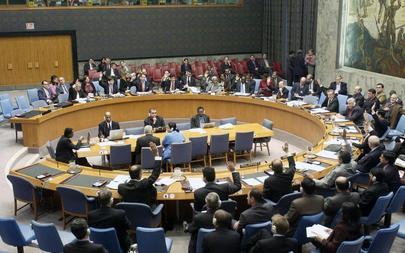 |
| مجلس الأمن يمدد ولاية قوة اليونيفيل - ٣١ تموز ٢٠٠٤ |
في تقريره المؤرخ في ٢٠ كانون الثاني ٢٠٠٤ والذي يغطي الفترة إبتداءً من ٢٤ تموز ٢٠٠٣، قال الأمين العام ان الهدوء النسبي الذي ساد في النصف الأول من العام تراجع أمام تجدد تبادل إطلاق النار في منطقة مزارع شبعا. وأسفرت الغارات الجوية وحوادث إطلاق النار عبر الخط الأزرق عن مقتل ثلاثة إسرائيليين، جنديين ومدني، وثلاثة مدنيين لبنانيين. كما أسهم إستمرار الخروقات الإسرائيلية للمجال الجوي اللبناني وإطلاق حزب الله النيران المضادة للطائرات عدة مرات نحو القرى الإسرائيلية إسهاماً كبيراً في زيادة حدة التوتر.
وقال الأمين العام ان الألغام الأرضية لا تزال تشكل مصدر قلق بالغ. ومع ذلك إستمر التعاون بين الأمم المتحدة ومختلف الشركاء في إحراز نتائج باهرة في جنوب لبنان. وهناك نصف مليون متر مربع إضافي من الأراضي المزروعة سابقاً بالألغام أعيدت الى الإستخدام المنتج وتم العثور على ٢٠٫٠٠٠ لغم أرضي وتدميرها، وبذلك بلغ مجموع مساحة الأراضي المنظفة من الألغام ما يقرب من ٤٫٨ مليون متراً مربعاً.
كما تواصل التقدم في مجالات المساعدة للسكان المدنيين ودمج المنطقة المحتلة سابقاً مع باقي أنحاء البلاد، بما في ذلك البنية التحتية، نظم الصحة والرعاية الإجتماعية، فضلاً عن الخدمات البريدية والإتصالات.
وفي قراره رقم ١٥٢٥ (٢٠٠٤) المؤرخ في ٣٠ كانون الثاني ٢٠٠٤، مدد مجلس الأمن مهمة قوة اليونيفيل حتى ٣١ تموز ٢٠٠٤.
الوضع في المنطقة من كانون الثاني الى تموز ٢٠٠٤
في تقريره المؤرخ في ٢١ تموز ٢٠٠٤ والذي يغطي الفترة إبتداءً من ٢١ كانون الثاني، وصف الأمين العام الوضع في جنوب لبنان بأنه "مليء بالتناقضات". وبعد أن أعلن كل من إسرائيل ولبنان عن تطلعاتهما الى تجنب زعزعة الإستقرار في المنطقة، مر شهر واحد فقط دون مواجهة.
ناشد الأمين العام جميع الأطراف على كبح قواتها، وقال: "لا يسعني إلا أن اشدد على ضرورة قيام الأطراف بالتقيد بإلتزاماتهم بموجب قرارات مجلس الأمن ذات الصلة، وإحترام خط الإنسحاب وممارسة أقصى درجات ضبط النفس".
كما أعرب الأمين العام عن بالغ قلقه من "إستمرار إسرائيل في القيام بخروقات جوية إستفزازية وغير مبررة لسيادة الأراضي اللبنانية، مضيفاً "أن قيام حزب الله بالإنتقام عن طريق إطلاق زخات من المدافع المضادة للطائرات عبر الخط الأزرق هو خرق يشكل تهديداً مباشراً لحياة البشر". وحذر الأمين العام من أن الخطر لا يزال كبيراً من الأعمال العدائية التي من شأنها أن تؤدي الى تصعيد للوضع وصراع بين الأطراف، وأوصى بالتمديد لقوة اليونيفيل لمدة ستة أشهر إضافية.
وعلى الجانب الإيجابي، أشار التقرير الى أن كل جنوب لبنان، بما في ذلك جميع قرى المنطقة التي كانت تحتلها إسرائيل سابقاً وصولاً الى الخط الأزرق، شاركت بنجاح في الإنتخابات البلدية. وإذ أشاد بهذا التطور وإعتبره "تأكيداً واضحاً على ممارسة السلطة من جانب حكومة لبنان"، حث الأمين العام سلطات البلاد على "ضمان عودة سلطتها الفعالة في جميع أنحاء الجنوب، بما في ذلك نشر القوات المسلحة اللبنانية، و بذل قصارى جهدها لضمان الهدوء".
وفي قراره رقم ١٥٥٣ (٢٠٠٤) المؤرخ في ٢٩ تموز ٢٠٠٤، مدد مجلس الأمن ولاية قوة اليونيفيل حتى ٣١ كانون الثاني ٢٠٠٥، وكرر دعمه القوي لوحدة وسيادة لبنان وإستقلاله السياسي داخل حدوده المعترف بها دولياً. وإذ أدان جميع أعمال العنف، أعرب المجلس عن قلقه الشديد إزاء الخروقات البحرية والبرية والجوية المتواصلة لخط الإنسحاب. كما حث الطرفين على وضع حد لهذه الخروقات، الإمتناع عن القيام بأي عمل أو إستفزاز من شأنه تصعيد التوتر، وعلى التقيد الدقيق بإلتزاماتهما التي تقضي بإحترام سلامة قوة اليونيفيل وغيرها من موظفي الأمم المتحدة.
الوضع في المنطقة من تموز ٢٠٠٤ الى كانون الثاني ٢٠٠٥
في تقريره المقدم الى مجلس الأمن في ٢٠ كانون الثاني ٢٠٠٥، قال الأمين العام انه، خلال الفترة الممتدة من تموز ٢٠٠٤ حتى كانون الثاني ٢٠٠٥، نعِم الخط الأزرق بفترة طويلة من الهدوء النسبي. وأعرب الأمين العام عن أمله في أن هذا الوضع من شأنه أن يتيح فرصة لإحراز تقدم نحو الهدف المتمثل في تحقيق السلام والأمن الدوليين في جنوب لبنان. لكن، وكما سبق أن حصل أكثر من مرة خلال السنوات الأربع الماضية، ومرة أخرى في كانون الثاني ٢٠٠٥، غالباً ما كانت تعقب فترات الهدوء على طول الخط الأزرق سلسلة من الأعمال العدائية. وتابع الأمين العام قي تقريره، رغم أن أعمال العنف كانت أقل مما كانت عليه خلال الفترة المشمولة بالتقرير السابق، فإن التوتر بين الطرفين لم يضعف ولا في أي وقت من الأوقات. كما ظلت اللهجة العدائية طاغية، وبقي الإستقرار مهدداً، ليس بسبب الحوادث الكبيرة التي وقعت في ٩ و ١٧ كانون الثاني فقط، وإنما بسبب الأفعال المتهورة أيضاً، ولأول مرة، الطلعات الجوية من كلا الجانبين.
ووفق ما قال الأمين العام في التقرير، فإن إستئناف التدابير العسكرية، التي كان لحزب الله دور كبير فيها، وتأكيده على مطلبه في أن من حقه مقاومة الإحتلال الإسرائيلي للأراضي اللبنانية بالقوة، كان مثيراً للقلق. الأمم المتحدة أوضحت تماماً أنه من غير المقبول إنتهاك الخط الأزرق. وموقف حكومة لبنان الذي يواصل التأكيد على أن الخط الأزرق غير نافذ في منطقة مزارع شبعا لا يتفق مع قرارات مجلس الأمن. وقد أقر المجلس صحة الخط الأزرق لغرض تأكيد إنسحاب إسرائيل عملاً بالقرار ٤٢٥ (١٩٧٨). وعلى حكومة لبنان أن تستجيب لنداءات المجلس المتكررة التي تدعو الأطراف الى إحترام الخط الأزرق بكامله.
كذلك ذكر الأمين العام في تقريره أن الخروقات الجوية لا تزال تشكل مصدر قلق بالغ. وطالما أن إسرائيل تستمر في تطبيق سياسة التحليق فوق لبنان ساعة تشاء، فإنها تخاطر في إثارة أعمال إنتقامية من الجانب اللبناني.
وعلاوة على ذلك، فإن خرق جدار الصوت الدوري فوق التجمعات السكانية يثير عداء السكان المحليين. وفي حين أنه لم يسجل وقوع حوادث إطلاق نار مضادة للطائرات عبر الخط
 |
خلال الفترة المشمولة بالتقرير، وهو أمر جدير بالملاحظة والترحيب، فإن حزب الله أطلق طائرة إستطلاع بدون طيار الى إسرائيل، وهو تطور يؤسف له، علماً أن مثل هذا النشاط يؤدي بالتأكيد لإثارة التوتر ويزيد إحتمالات المواجهة العسكرية. وقد رغب الأمين العام في تذكير جميع الأطراف بالموقف الثابت للأمم المتحدة بأنه ينبغي ألا تكون هناك خروقات جوية، وهو الموقف الذي ينطبق على جانبي الخط الأزرق.
وقال الأمين العام أن حوادث إطلاق الصواريخ التي يقوم بها أفراد يُعتقد أنهم تابعون لفصائل فلسطينية تزعزع إستقرار هذا القطاع. ومن المهم الإشارة الى أن أيٍ من الحوادث لم تؤدِ الى تصعيد عسكري، وهو الأمر الذي تستحق عليه اليونيفيل والأطراف التقدير، مع العلم أن هذا النوع من الحوادث يعرّض الإستقرار في المنطقة لخطر كبير. واصلت الحكومة اللبنانية ممارسة القدرة التي برهنت عليها حتى الآن في ممارسة السلطة والأمن من خلال مختلف أنشطة قوة الأمن المشتركة، بما في ذلك ردود سريعة على أحداث معينة. ومع ذلك، لا بد من عمل المزيد لتلبية دعوة مجلس الأمن إلى توسيع نطاق التدابير لضمان عودة السلطة الحكومية الفعالة إلى جميع أنحاء الجنوب، بما في ذلك عن طريق نشر المزيد من القوات المسلحة اللبنانية. ومرة أخرى، حث الأمين العام الحكومة على أن تبذل قصارى جهدها لضمان الهدوء وممارسة سيطرة كاملة على إستخدام القوة على كامل أراضيها.
وختم التقرير بقول الأمين العام أن الوضع على طول الخط الأزرق لا يزال عرضة للتطورات الإقليمية المتقلبة، مما يؤكد الحاجة الى تحقيق سلام شامل وعادل ودائم في الشرق الأوسط، على أساس كل القرارات ذات الصلة لمجلس الأمن. وفي ضوء الظروف السائدة في المنطقة، أوصى الأمين العام بأن يمدد المجلس ولاية قوة اليونيفيل حتى ٣١ تموز ٢٠٠٥.
وإذ ساوره بالغ القلق إزاء إستمرار التوتر والعنف على طول الخط الأزرق بين لبنان وإسرائيل، فإن مجلس الأمن بموجب قراره رقم ١٥٨٣ (٢٠٠٥) المؤرخ في ٢٨ كانون الثاني، أدان جميع أعمال العنف، بما في ذلك الحوادث التي وقعت مؤخراً عبر الخط والتي أدت الى قتل وجرح مراقبي الأمم المتحدة العسكريين، ومدد ولاية قوة اليونيفيل حتى ٣١ تموز ٢٠٠٥.
وأيد المجلس جهود قوة اليونيفيل المتواصلة للحفاظ على وقف إطلاق النار على طول خط الإنسحاب، لكنه أعرب عن إعتزامه إعادة النظر في ولاية القوة وهيكليتها في نهاية فترة الولاية، ولهذه الغاية طلب من الأمين العام تقديم توصيات، مع مراعاة الوضع على الأرض والأنشطة التي تقوم بها القوة في منطقة عملياتها، إضافة الى مساهمتها المهمة المتبقية والمتمثلة في إعادة السلم والأمن الدوليين.
الوضع في المنطقة من كانون الثاني الى تموز ٢٠٠٥
قدم الأمين العام تقريراً آخر في ٢٠ تموز ٢٠٠٥ غطى فيه التطورات التي حدثت إبتداءً من كانون الثاني ٢٠٠٥، وتضمن توصيات بشأن ولاية القوة وهيكليتها على أساس تقييم بعثة تابعة لـِ ’إدارة عمليات حفظ السلام‘ (DPKO) زارت لبنان في الفترة من ٨ إلى ١٠ أيار.
ووفق ما ذكر تقرير الأمين العام، فإن هدوءاً هشاً ساد منطقة عمليات قوة اليونيفيل خلال معظم الفترة قيد النظر، على الرغم من أن الوضع كثيراً ما إتسم بالتوتر. وتواصلت الخروقات للخط الأزرق، في معظم الأحيان على شكل خروقات جوية متكررة من قبل الطائرات الحربية وطائرات الهليكوبتر والطائرات المسيرة بدون طيار الإسرائيلية، كذلك حدثت خروقات برية من الجانب اللبناني قام بها رعاة ماشية لبنانيين. كما تصاعدت الأعمال العدائية في المنطقة في أيار بإشتباك بين حزب الله والجيش الإسرائيلي أُطلقت خلاله صواريخ من قبل عناصر مسلحة مجهولة الهوية. وفي ٢٩ حزيران تدهور الوضع إلى حدٍ كبير بعدما دخل حزب الله والجيش الإسرائيلي في تبادل كثيف لإطلاق النار في منطقة مزارع شبعا، مما أدى الى مقتل أحد جنود الجيش الإسرائيلي وجرح أربعة آخرين ومقتل إثنين من مقاتلي حزب الله.
الأعمال العدائية التي وقعت في أيار، والحادثة الخطيرة التي وقعت في ٢٩ حزيران، أظهرتا مرة أخرى، أن الوضع لا يزال مضطرباً، مع إحتمال تدهور الأوضاع، وفق ما ذكر الأمين العام. هذا في وقت يعلن فيه كل من لبنان وإسرائيل عن رغبتهما على نحو منتظم في تجنب المواجهة وزعزعة الإستقرار في المنطقة. وإعتبر الأمين العام في تقريره أن التنمية الإقتصادية في الجنوب مرتبطة إرتباطاً وثيقاً بالسلام والأمن. ودعا الحكومة اللبنانية، الجهات المانحة الدولية، وكالات الأمم المتحدة والمنظمات غير الحكومية لزيادة جهودها من أجل إعادة التأهيل الإقتصادي والتنمية إلى جنوب لبنان.
وتابع الأمين العام في تقريره مشيراً الى أنه منذ إغتيال رئيس الوزراء الأسبق رفيق الحريري في ١٤ شباط، يمر لبنان بفترة من عدم الإستقرار السياسي المتزايد، ويتجلًى ذلك من خلال التظاهرات الواسعة في العاصمة، إستقالة الحكومة، وقوع عدد من التفجيرات في مناطق مختلفة من بيروت، وإغتيال الصحافي سمير قصير والسياسي جورج حاوي، وأحدث هذه الأعمال، الهجوم على موكب وزير الدفاع الياس المر. وأتاح إنسحاب القوات السورية من لبنان مع نهاية نيسان المجال لإجراء إنتخابات برلمانية حرة ونزيهة على مدى أربعة أسابيع في أيار وحزيران. على القوات المسلحة اللبنانية الآن أن تُظهر أنها تستطيع الحفاظ على الأمن الفعلي في جميع أنحاء البلاد، في وقت تم فيه تخفيض حجم الجيش اللبناني بشكل كبير.
وإذ تطرّق الى التقييم الذي أجرته ’إدارة عمليات حفظ السلام‘ (DPKO)، إتفق الأمين العام مع وجهة نظرها التي تعتبر أنه في ظل الوضع السياسي والأمني القائم في جنوب لبنان، فإن مجموعة من المشاة المسلحين والمراقبين غير المسلحين لقوة اليونيفيل لا تزال ضرورية لتنفيذ المهام المكلفة بها، وأن المستوى الحالي للقوات مطلوب للحفاظ على المواقع الحساسة في مناطق العمليات التي تراقب الخط الأزرق وما يجري بمحيطه، إضافة الى توفير الحماية المناسبة لموظفي وممتلكات كل من اليونيفيل وفريق المراقبين في لبنان. وأكدت السلطات اللبنانية والدبلوماسيون، من دون إستثناء، أنه في ظل الظروف السياسية والأمنية السائدة حالياً، تواصل قوة اليونيفيل الإضطلاع بدور حاسم في تنفيذ ولايتها وفقاً لقرار المجلس رقم ٤٢٥ (١٩٧٨).
وخلُص الأمين العام الى أن الوضع في لبنان والمنطقة لا يساعد على إجراء تغيير في ولاية قوة اليونيفيل أو إجراء إعادة تشكيل آخر لها في هذه المرحلة، وأوصى بأن يمدد مجلس الأمن مهمتها حتى ٣١ كانون الثاني ٢٠٠٦ دون تغيير في عديد القوة وتكوينها.
وبعد أن تبنى بالإجماع القرار رقم ١٦١٤ (٢٠٠٥)، مدد المجلس لقوة اليونيفيل ودعا حكومة لبنان الى بسط سلطتها "الوحيدة والفعالة" بشكل كامل في كافة أرجاء الجنوب، بما في ذلك من خلال نشر عدد كافٍ من القوات المسلحة وقوات الأمن والى ممارسة "السيطرة وإحتكار إستخدام القوة" على كامل أراضيها. وفي هذا الصدد، رحّب المجلس بإعتزام الأمين العام أن يناقش مع الحكومة اللبنانية الخطوات المقبلة المزمع إتخاذها لتوسيع نطاق سلطتها في الجنوب.
أخذ المجلس علماً برأي الأمين العام الذي مؤداه أن الوضع لا يساعد على إجراء تغيير في ولاية قوة اليونيفيل أو إعادة تشكيل آخر لها في المرحلة الراهنة. إلا أن المجلس أعرب عن عزمه إبقاء ولاية القوة وهيكليتها قيد المراجعة المنتظمة.
الوضع في المنطقة من تموز ٢٠٠٥ الى كانون الثاني ٢٠٠٦
وفي تقرير آخر عن قوة اليونيفيل مؤرخ في ١٨ كانون الثاني ٢٠٠٦، أوصى الأمين العام بتمديد مهمة القوة لمدة ستة أشهر أخرى حتى ٣١ تموز ٢٠٠٦.
وبعد أن وصف المناخ السياسي والأمني بأنه لا يزال هشاً، أشار الأمين العام تحديداً الى هجوم حزب الله في تشرين الثاني ٢٠٠٥، الذي أدى الى تبادلٍ كثيف لإطلاق النار مع الجيش الإسرائيلي. كما حذر من أن حوادث إطلاق الصواريخ من قبل عناصر مسلحة مجهولة الهوية في آب وكانون الأول يمكن أن تؤدي الى تصعيد عسكري كبير. كما أن إستمرار الطلعات الجوية الإسرائيلية في الأجواء اللبنانية تعكّر الهدوء الهش.
وقال الأمين العام: "الإنتهاكات الخطيرة لوقف إطلاق النار تدلل مرة أخرى على الحاجة الملحة لحكومة لبنان للعمل على توسيع نطاق سلطتها الكاملة في جميع أنحاء الجنوب حتى الخط الأزرق". وأثنى على إلتزام لبنان تحميل مرتكبي الهجمات المسؤولية عن تكرارها، كما رحّب بخطوات جديدة للتنسيق بين الحكومة وقوة اليونيفيل، بيد أنه شدد على أنه "لا بد من عمل المزيد".
ورحّب الأمين العام بقرار الحكومة اللبنانية إنشاء مكتب إرتباط للجيش مع مقر اليونيفيل في الناقورة، تعيين ضباط إرتباط مع الكتائب الميدانية التابعة لليونيفيل والعمل بشكل أوثق مع قوة اليونيفيل في الميدان. وأعرب عن سروره لتعيين منسق جديد للحكومة مع قوة اليونيفيل. وقال ان التخطيط لنشر قوات إضافية في الجنوب يجب أن يبدأ دون تأخير.
وفي هذا الصدد، حث الحكومة اللبنانية على الأخذ بإقتراح القائد العام لليونيفيل الذي يقضي بإنشاء خلية تخطيط مشتركة مؤلفة من أعضاء من القوات المسلحة اللبنانية واليونيفيل. ويمكن تعزيز أنشطة وتواجد قوة الأمن المشتركة على الأرض، حتى ضمن حدود عديدها المأذون به وهو ١٠٠٠ جندي. هذا مع العلم أن التنسيق الوثيق بين دوريات اليونيفيل والقوة الأمنية المشتركة في الجنوب من شأنه أن يسهم في تعزيز دور وأنشطة القوات المسلحة اللبنانية في المنطقة.إن تأثير زيادة وجود القوات المسلحة اللبنانية في الجنوب على هيكلية وتمديد اليونيفيل سيقيم بإنتظم.
بموجب القرار ١٦٥٥ الصادر في ٣١ كانون الثاني ٢٠٠٦، مدد مجلس الأمن ولاية اليونيفيل حتى ٣١ تموز ٢٠٠٦، ودعا حكومة لبنان مرة أخرى الى بسط سلطتها الكاملة والفعالة والوحيدة وممارستها في جميع أنحاء الجنوب. وبموجب القرار المذكور، أدان المجلس جميع أعمال العنف، بما في ذلك الحوادث الخطيرة عبر الخط الأزرق التي إنطلقت من الجانب اللبناني وأسفرت عن قتلى وجرحى من الجانبين.
وأعرب المجلس عن قلقه الشديد إزاء الإنتهاكات الخطيرة والخروقات البحرية والبرية والجوية لخط الإنسحاب، وحث الطرفين على وضع حد لهذه الخروقات، الإمتناع عن أي عمل إستفزازي من شأنه أن يزيد من تصعيد حدة التوتر وعلى التقيد الدقيق بإلتزاماتهما التي تقضي بإحترام سلامة قوة اليونيفيل وغيرها من موظفي الأمم المتحدة، بما في ذلك عدم القيام بأي عمل من شأنه تعريض سلامة موظفي الأمم المتحدة للخطر.
وبموجب هذا القرار أيضاً، رحّب المجلس بقرار الحكومة الأخير إنشاء مكتب إرتباط للقوات المسلحة اللبنانية في مقر اليونيفيل، وثمّن عزم الحكومة اللبنانية الراسخ بالحفاظ على الأمن الذي تجلّى في تعزيز وجود قواتها المسلحة في المنطقة الجنوبية وفي تنسيق أنشطتها مع قوة اليونيفيل.
غير ان المجلس حث الحكومة على بذل مزيد من الجهد لتأكيد سلطتها في الجنوب، ولممارسة السيطرة وإحتكار إستخدام القوة والحفاظ على القانون والنظام على كامل أراضيها. كما حث الحكومة على منع الهجمات من لبنان عبر الخط الأزرق، بما في ذلك من خلال نشر أعداد إضافية من القوات المسلحة اللبنانية وقوى الأمن الداخلي والأخذ بمقترحات اليونيفيل لتعزيز التنسيق وإنشاء خلية تخطيط مشتركة.
وأعرب المجلس عن عزمه إبقاء ولاية اليونيفيل وهيكليتها قيد المراجعة المنتظمة، آخذاً في الإعتبار الوضع القائم على الأرض، الأنشطة التي تقوم بها القوة في منطقة عملياتها، مساهمتها المهمة المتبقية والمتمثلة في إعادة السلام والأمن، ووجهات نظر الحكومة اللبنانية والتدابير التي إتخذتها لبسط سلطتها بالكامل في الجنوب، فضلاً عن الآثار المترتبة على هذه التدابير بغية تسهيل قيام القوة بمهامها.
إندلاع أزمة جديدة
إندلعت أعمال عدائية جديدة على الحدود اللبنانية الإسرائيلية في ١٢ تموز ٢٠٠٦ بعدما أطلق حزب الله عدة صواريخ من الأراضي اللبنانية عبر الخط الأزرق في إتجاه مواقع الجيش الإسرائيلي بالقرب من الساحل وفي محيط بلدة زرعيت الإسرائيلية. وفي موازاة ذلك، عبر مقاتلو حزب الله الخط الأزرق الى إسرائيل، هاجموا دورية إسرائيلية وأسروا جنديين إسرائيليين، كما قتلوا ثلاثة وجرحوا إثنين آخرين. وتم نقل الجنود الى لبنان.
 |
| حرب ال٣٤ يوماً بين حزب الله وإسرائيل - ٢٠ تموز ٢٠٠٦ |
وفي أعقاب الهجوم على الدورية، حصل تبادل كثيف لإطلاق النار عبر الخط الأزرق بين حزب الله والجيش الإسرائيلي. وفي حين أن تبادل إطلاق النار إمتد على طول الخط بكامله، فإنه كان شديداً في المناطق الواقعة غرب بنت جبيل وفي منطقة مزارع شبعا. إستهدف حزب الله مواقع الجيش الإسرائيلي والبلدات الإسرائيلية جنوب الخط الأزرق، وردت إسرائيل بهجمات برية وجوية وبحرية. وبالإضافة الى الغارات الجوية على مواقع حزب الله، إستهدف الجيش الإسرائيلي العديد من الطرق والجسور في جنوب لبنان داخل وخارج منطقة عمليات قوة اليونيفيل.
في تقريره الصادر في تموز عن قوة اليونيفيل، الذي يغطي الفترة الممتدة من ٢١ كانون الثاني حتى ١٨ تموز ٢٠٠٦، أشار الأمين العام الى أن الوضع في منطقة عمليات اليونيفيل لا يزال متوتراً ومتفجراً، رغم أنه كان هادئاً بوجه عام خلال معظم الفترة المشمولة بالتقرير. ولكن، بدء الأعمال العدائية الجديدة في ١٢ تموز "غيرت جذرياً السياق" الذي تعمل فيه اليونيفيل، مضيفاً أنه "في ظل الأجواء الراهنة، لم تعد الظروف المساعدة للأمم المتحدة موجودة"، مشيراً الى أن القوة كانت مقيدة من القيام حتى بالأنشطة الأساسية، مثل القدرة على إعادة إمداد مواقعها وإجراء عمليات الإنقاذ والبحث عن أفرادها. ونظراً لإنتهاء ولاية اليونيفيل في 31 تموز/ يوليو، أوصى الأمين العام بأن يمدد مجلس الأمن فقط لمدة شهر ريثما يتم النظر في خيارات أخرى في المستقبل لوضع ترتيبات في جنوب لبنان.
وافق المجلس على توصية الأمين العام، وبموجب قراره رقم ١٦٩٧ الصادر في ٣١ تموز، مدد ولاية قوة اليونيفيل حتى ٣١ آب ٢٠٠٦. كما أعرب المجلس عن عميق قلقه إزاء تصعيد الأعمال العدائية في لبنان وإسرائيل منذ ١٢ تموز، وحث جميع الأطراف المعنية على تجنب أي عمل من شأنه تعريض سلامة موظفي الأمم المتحدة للخطر، ودعا الأطراف الى السماح للقوة بإعادة إمداد مواقعها، إجراء عمليات الإنقاذ والبحث عن موظفيها، والقيام بأي تدابير أخرى تراها ضرورية لضمان سلامة موظفيها.
مجلس الأمن يدعو الى إنهاء الأعمال العدائية، زيادة عديد اليونيفيل، توسيع الولاية
بينما كان النزاع بين إسرائيل وحزب الله مندلعاً في جنوب لبنان، بقي الأمين العام على إتصال منتظم مع رئيسي وزراء لبنان وإسرائيل، فضلاً عن غيرهما من الجهات ذات الصلة والأطراف المعنية. كما أوفد عدداً من البعثات الرفيعة المستوى الى المنطقة.
في هذه الأثناء، واصلت قوة اليونيفيل شغل جميع مواقعها، ولعبت دوراً نشطاً وبناءً في إطار ولايتها. وعلى الرغم من إعاقة حركتهم جراء إستمرار أعمال العنف، فإن جنود حفظ السلام في اليونيفيل قاموا بأعمال مراقبة عسكرية، ساعدوا في الجهود الإنسانية وقدموا المساعدة الطبية، وكل ذلك في ظل أجواء خطرة جداً. إشارة إلى أن القتال الشرس في تموز وآب أسفر عن جرح ١٦ شخصاً من موظفي الأمم المتحدة، وتسبب في مقتل خمسة بشكل مأساوي.
في ١١ آب ٢٠٠٦، وبعد مفاوضات مكثفة، أصدر مجلس الأمن القرار رقم ١٧٠١ الذي يدعو الى وقفٍ كامل للأعمال العدائية في الحرب المتواصلة منذ شهر على أساس "وقفٍ
 |
| إزالة الأنقاض من القصف الإسرائيلي على مبنى سكني في مدينة صور - تموز ٢٠٠٦ |
فوري من جانب حزب الله لكل الهجمات، ووقف فوري من جانب إسرائيل لكل العمليات العسكرية الهجومية " في لبنان.
وإدراكاً منه لمسؤولياته في المساعدة على تأمين وقفٍ دائم لإطلاق النار وإيجاد حل طويل الأمد لهذا النزاع، أنشأ مجلس الأمن منطقة عازلة خالية من "أي أفراد مسلحين، موجودات وأسلحة غير تلك التابعة لحكومة لبنان واليونيفيل" بين الخط الأزرق الذي وضعته الأمم المتحدة في جنوب لبنان ونهر الليطاني، ودعا كلٍ من إسرائيل ولبنان لدعم وقفٍ دائم لإطلاق النار والى حلٍ شامل للأزمة.
وأتى هذا القرار بعد أسبوع من المناقشات المكثفة بين فرنسا والولايات المتحدة على صيغته الأصلية، وتم تقديمه في ٥ آب، لكنه لقي معارضة شديدة من الزعماء العرب الذين قالوا انه تجاهل مخاوف لبنانية رئيسية لصالح إسرائيل، الأمر الذي أدى الى قيام وفد مؤلف من كبار المسؤولين في جامعة الدول العربية بزيارة عاجلة الى نيويورك. وفي إجتماع خلف الأبواب المغلقة مع الأمين العام للأمم المتحدة تبنوا قضية لبنان، وقدموا الى المجلس طرحاً مدعوماً من الدول العربية، متضمناً مطلب الحكومة اللبنانية بوقف إطلاق نار شامل، ومن بين أمور أخرى، دعوا الى تبادل للأسرى بين إسرائيل وحزب الله.
وفي خطاب سبق أعمال المجلس، أعرب الأمين العام عن إرتياحه لأن القرار إشترط وقفاً فورياً وكاملاً لجميع الأعمال العدائية. وقال انه "من الضروري تماماً أن يتوقف القتال الآن". وأضاف: "إذا ما توقف القتال، أعتقد أن هذا القرار سيجعل من الممكن إبرام إتفاقٍ دائم لوقف إطلاق النار في الأيام المقبلة. وآمل أن يكون ذلك بداية عملية لحل المشاكل السياسية الكامنة في المنطقة بالوسائل السلمية".
وقال الأمين العام أنه يشعر بخيبة أمل بالغة لأن المجلس لم يصل الى هذه النقطة في وقت أسرع، وأنه على إقتناع بأن الشعور بالإحباط وخيبة الأمل كان يشاركه إياه مئات الملايين من البشر في جميع أنحاء العالم. وكان الأمين العام قد دعا مراراً وتكراراً وعلى مدى أسابيع لوقفٍ فوري للأعمال العدائية، من أجل السكان المدنيين على الجانبين، وقال: "يجب أن يدرك جميع أعضاء هذا المجلس أن هذا العجز عن التحرك بشكل سريع هز ثقة العالم بسلطته ونزاهته"، مضيفاً أن "الحرب ليست وجهاً أخر من السياسة"، وهي "تمثل فشلاً ذريعاً للحنكة والمهارات السياسية".
وأكد القرار الجديد على ضرورة وضع حد للعنف، لكنه شدد في الوقت نفسه على ضرورة التصدي العاجل للأسباب التي أدت الى هذه الأزمة، بما في ذلك الإفراج غير المشروط عن الجنديين الإسرائيليين المختطفين. "وإدراكا منه لحساسية مسألة السجناء"، فإن نص القرار شجع أيضاً الجهود الرامية الى إيجاد تسوية عاجلة لمسألة السجناء اللبنانيين المحتجزين في إسرائيل.
ومن بين أمور أخرى، دعا إسرائيل ولبنان الى دعم حل طويل الأمد على أساس الإحترام الكامل للخط الأزرق من جانب كلا الطرفين؛ التنفيذ الكامل للبنود ذات الصلة من إتفاق الطائف؛ عدم وجود قوات أجنبية في لبنان من دون موافقة حكومته، عدم بيع أو إمداد الأسلحة والمعدات ذات الصلة إلى لبنان من دون إذن حكومته، وتزويد الأمم المتحدة بجميع الخرائط المتبقية للألغام الأرضية في لبنان الموجودة بحوزة إسرائيل.
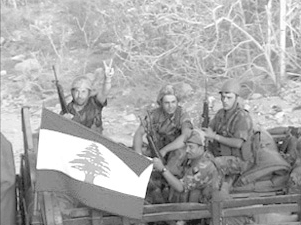 |
| القوات المسلحة اللبنانية تنتشر في الجنوب - آب ٢٠٠٦ |
وإذ رحّب بقرار الحكومة اللبنانية في ٧ آب الذي يقضي بنشر ١٥٫٠٠٠ جندي من القوات المسلحة في جنوب لبنان، مدد المجلس ولاية القوة حتى نهاية آب ٢٠٠٧، وزيادة عديدها (حوالي ٢٠٠٠ جندي إعتباراً من آب ٢٠٠٦) الى حد أقصى يبلغ ١٥٫٠٠٠ جندي. وإضافة إلى تنفيذ ولايتها الأصلية بموجب قراري مجلس الأمن ٤٢٥ و ٤٢٦ (١٩٧٨)، فإن اليونيفيل، في جملة أمور أخرى، سترصد وقف الأعمال العدائية، مرافقة ودعم القوات المسلحة اللبنانية خلال إنتشارها في جميع أنحاء الجنوب، وتقديم مساعدتها لضمان وصول المساعدات الإنسانية إلى السكان المدنيين والعودة الطوعية والآمنة للنازحين (لمزيد من التفاصيل راجع قسم ’الولاية‘ ).
وأكد النص على أهمية قيام حكومة لبنان ببسط سيطرتها على جميع الأراضي اللبنانية وفقاً لبنود قراري مجلس الأمن ١٥٥٩ (٢٠٠٤) و ١٦٨٠ (٢٠٠٦)، ودعا الحكومة الى تأمين حدودها وغيرها من نقاط الدخول لمنع دخول الأسلحة أو الأعتدة ذات الصلة دون موافقتها. كذلك قرر أن تتخذ جميع الدول التدابير اللآزمة لمنع بيع أو توريد الأسلحة والأعتدة ذات الصلة من جميع الأنواع "من جانب مواطنيها أو إنطلاقاً من أراضيها أو بإستخدام السفن أو الطائرات التي ترفع أعلامها" لأي كيان أو فرد في لبنان.
وقف الأعمال العدائية يصمد
ونظراً لأهمية تنفيذ قرار مجلس الأمن رقم ١٧٠١، زار الأمين العام المنطقة بنفسه. حضر الإجتماع الإستثنائي على المستوى الوزاري للإتحاد الأوروبي في بروكسل في ٢٥ آب، و في الأيام التالية سافر إلى لبنان، إسرائيل، الأراضي الفلسطينية المحتلة، الأردن، الجمهورية العربية السورية، جمهورية إيران الإسلامية، قطر، المملكة العربية السعودية، مصر، تركيا واسبانيا. وإجتمع برؤساء الدول، رؤساء الحكومات، وزراء الخارجية وغيرهم من كبار المسؤولين. بالإضافة الى ذلك، فإن الأمين العام بقي على إتصال وثيق عبر الهاتف مع كبار المسؤولين وممثلي الأطراف المعنية الأخرى والجهات ذات الصلة على مدى مهمته. وفي تقريره الى مجلس الأمن، قال الأمين العام انه سمع تأييداً واسعاً لتنفيذ القرار ١٧٠١، وأنه تشجع من الإلتزام العام لناحية إستعادة الأمن والإستقرار الى منطقة الشرق الأوسط. وأشار الى أن جهوده ساهمت على ما يبدو في تأمين إلتزامات عدد من البلدان المساهمة بقوات للمساعدة فى إستقرار الوضع في إطار اليونيفيل، إضافة إلى رفع كامل للحصار الجوي والبحري الذي كانت إسرائيل قد فرضته على لبنان.
وفي غضون ٣٠ يوماً من تبني القرار ١٧٠١، قدم الأمين العام تقريرين إلى المجلس حول تنفيذه: تقرير أول في ١٨ آب، وتقرير ثانٍ في ١٢ أيلول. في التقرير الأخير، قال الأمين
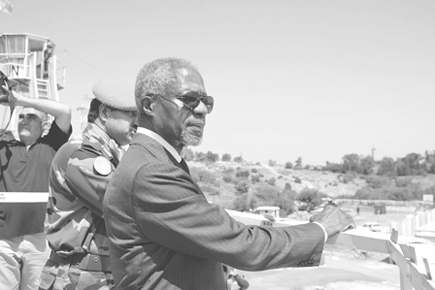 |
| أمين عام الأمم المتحدة الأسبق "كوفي انان" خلال زيارته اليونيفيل - آب ٢٠٠٦ |
العام ان إسرائيل وحزب الله "إستجابا إلى حد كبير" مع إتفاق وقف الأعمال العدائية. وأشار إلى أنه رغم حصول خروقات للإتفاق، فإنها لم تكن "ذات طابع هجومي وعدائي"، بمعزل عن حادثة واحدة خطيرة وقعت لدى شن الجيش الإسرائيلي غارة على شرق لبنان في ١٩ آب.
وقال الأمين العام ان "النزاع المأساوي الذي إستمر ٣٤ يوماً أعاد المنطقة الى حالة عدم الإستقرار التي سادت لعقود من الزمن". وإذ شدد على أن الأمن، الإستقرار والسلام الشامل لا تزال الأهداف الملحّة، قال "أننا بدأنا أول الخطوات" في الوقت الذي لفت فيه الى أن "العديد من الخطوات الأخرى لا تزال مطلوبة".
وأشار التقرير الى أنه منذ وقف الأعمال العدائية، فإن الأمم المتحدة وغيرها من الوكالات ساعدت حكومة لبنان في تقييم الإحتياجات وغيرها من المهام العاجلة، بينما تركزت الإستجابة الإنسانية على جهود الإنعاش المبكرة والمبادرات السريعة لتقديم المساعدة إلى نحو مليون نازح لبناني.
كما أشار الأمين العام الى إحراز "تقدم كبير" بشأن الإنسحاب التدريجي للجيش الإسرائيلي ونشر قوات الجيش اللبناني، وقد لعبت اليونيفيل دوراً تنسيقياً بين الجانبين.
في الوقت نفسه، أكد الأمين العام من جديد أنه في حين تجري صياغة "تدابير قصيرة الأمد" لضمان وقف الأعمال العدائية وتحويلها الى وقف دائم لإطلاق النار، فإن حل دائم وطويل الأمد يتطلب أخذ القضايا الإقليمية في الحسبان. وقال الأمين العام: "من أجل منع إندلاع العنف وإراقة الدماء، لا بد من معالجة الأسباب الكامنة وراء الصراع في المنطقة. لا يمكن تجاهل الأزمات الأخرى، وخصوصاً في الأراضي الفلسطينية المحتلة، لأنها جميعاً مترابطة. وما لم يصر المجتمع الدولي على إيجاد حل عادل ودائم وشامل في الشرق الأوسط، فإن أيٍ من هذه الصراعات يمكن أن تندلع لتشمل المنطقة كلها".
نتائج الحرب
وفقاً لتقرير الأمين العام المؤرخ في ١٢ أيلول ٢٠٠٦، فإن الأرقام الرسمية اللبنانية أظهرت في ٣١ آب ٢٠٠٦ أن ١٫١٨٧ شخصاً لقوا حتفهم وجرح ٤٠٩٢ شخصاً في لبنان نتيجةً للنزاع، والكثير من هؤلاء الضحايا هم من الأطفال. وتشير تقديرات ’مكتب الأمم المتحدة لتنسيق الشؤون الإنسانية‘ (OCHA) إلى أن مليون لبناني نزحوا من ديارهم ما بين ١٢ تموز و 14 آب، نحو ٧٣٥٫٠٠٠ شخصاً منهم إلتجأوا الى أماكن آمنة داخل لبنان، ونحو ٢٣٠٫٠٠٠ شخصاً خارجه. وأحدث وقف الأعمال العدائية في ١٤ آب حركة هائلة وسريعة لعودة النازحين واللآجئين داخلياً الى مناطقهم الأصلية. ووفقاً لمفوضية الأمم المتحدة العليـا لشؤون اللآجئين (UNHCR)، فإنه في غضون أيام من وقف إطلاق النار، عاد نحو ٩٠ في المائة من النازحين – حوالي ٩٠٠٫٠٠٠ أو ربع عدد السكان - الى ديارهم أو أصبحوا مقيمين بالقرب منها. وفي نهاية آب، قُدّر عدد الأشخاص الذين ظلوا نازحين داخلياً بين ١٠٠٫٠٠٠ و ١٥٠٫٠٠٠ شخصاً.
وفي لبنان، قدّر ’مكتب تنسيق الشؤون الإنسانية‘ (OCHA) أن النزاع سبب أضراراً مادية بلغت ٣٫٦ مليار دولاراً، بما في ذلك تدمير ٨٠ جسراً، ٦٠٠ كيلومتراً من الطرقات؛ تدمير ٩٠٠ مصنعاً وسوقاً ومزرعة وغيرها من المباني التجارية، تدمير ٣١ مطاراً وميناءً وموقعاً لمعالجة مياه الصرف الصحي والسدود والمحطات الكهربائية، وتدمير ٢٥ محطة وقود. وتبلغ نسبة البطالة حالياً نحو ٧٥ في المائة في بعض أنحاء البلاد. وتم تقدير عدد المنازل التي دُمرت بما يقرب من ١٥٫٠٠٠ منزلاً.
على الجانب الإسرائيلي، في الفترة الممتدة من ١٢ تموز حتى ١٤ آب، قُتل ٤٣ مدنياً إسرائيلياً و ١١٧ جندياً من الجيش الإسرائيلي. إضافة إلى أعداد كبيرة من الأشخاص الذين عولجوا جراء الصدمة والقلق، وأصيب ٣٣ إسرائيلياً بجروح خطيرة و ٦٨ بجروح متوسطة. وخلال تلك الفترة، سقط ٣٫٩٧٠ صاروخاً على إسرائيل، ٩٠١ صاروخاً منها سقطوا على مناطق مدنية، ووفقاً للأرقام الرسمية الإسرائيلية، نزح ٣٠٠٫٠٠٠ من السكان، وأكثر من مليون شخص أُجبروا على العيش لبعض الوقت في الملاجئ.
منذ دخول وقف الأعمال العدائية حيّز التنفيذ، شهدت الإستجابة الإنسانية في لبنان تحولاً سريعاً لأنشطة الإنعاش المبكر والمبادرات العاجلة لتقديم المساعدة الى الأعداد الكبيرة من العائدين. النداء العاجل المعدّل للأمم المتحدة، الذي أطلق في ستوكهولم في ٣١ آب، ركّز على إزالة الألغام والذخائر غير المنفجرة، الإحتياجات الصحية والتعليمية الطارئة، المياه والصرف الصحي، على أن يتم تنفيذ الشطر الأكبر من المشاريع خلال الستة أسابيع القادمة.
قوة اليونيفيل المعززة تنتشر
ا
 |
| تعزيزات إيطالية لليونيفيل تصل إلى شواطئ صور - آب ٢٠٠٦ |
لعناصر الأولى من القوة المعززة تم نشرها بسرعة قياسية مقارنة مع أية عملية لحفظ السلام بهذا التعقيد، حيث ضمت وحدات من فرنسا، إيطاليا وإسبانيا وصلت جميعها إلى منطقة العمليات بحلول ١٥ أيلول، فإنضمت إلى الوحدات المتواجدة على الأرض من غانا والهند.
تجدر الإشارة الى أن الإنتشار السريع والفعال لقوة اليونيفيل المعززة، والأنشطة التي تقوم بها منذ ذلك الحين على أساس يومي، كان حاسماً في منع تكرار الأعمال العدائية عبر الخط الأزرق، وساعد على التأسيس لأجواء إستراتيجية عسكرية وأمنية جديدة في جنوب لبنان.
On 17 April 2000, the Secretary-General received formal notification from the Government of Israel that it would withdraw its forces from Lebanon by July 2000 "in full accordance with Security Council resolutions 425 (1978) and 426 (1978)". He was further informed that in so doing the Government of Israel intended "to cooperate fully with the United Nations". The Secretary-General informed the Security Council of this notification on the same day, stating that he had initiated preparations to enable the United Nations to carry out its responsibilities under those resolutions. On 20 April, the Council endorsed the Secretary-General's decision to initiate those preparations.
As a first step, the Secretary-General sent his Special Envoy, Terje Roed-Larsen (Norway), together with the Force Commander of UNIFIL and a team of experts, to meet with the Governments of Israel and Lebanon and concerned Member States in the region, including Egypt, Jordan and the Syrian Arab Republic. The delegation also met with the PLO and the League of Arab States. During the mission, United Nations cartographic, legal and military experts examined the technical issues that would need to be addressed in the context of the implementation of resolution 425 (1978). Parallel to that mission, which took place between 26 April and 9 May 2000, the Secretary-General consulted with interested Member States, including those contributing troops to UNIFIL.
Starting on 16 May, much sooner than anticipated, IDF/DFF began to vacate its positions, amid exchange of fire. Beginning on 21 May, large crowds of Lebanese, accompanied by armed elements, entered villages in the Israeli-controlled area, and IDF/DFF vacated their position in great haste. At the same time, a large number of the de facto forces, together with their families, crossed into Israel. Others surrendered to the Lebanese authorities. Within a few days, those forces had completely disbanded. On 25 May, the Government of Israel notified the Secretary-General that Israel had redeployed its forces in compliance with Security Council resolutions 425 (1978) and 426 (1978).
The requirements and tasks related to the implementation of those resolutions in the new circumstances were outlined in the Secretary-General's report of 22 May and endorsed by the Security Council on 23 May.
From 24 May to 7 June, the Special Envoy travelled to Israel, Lebanon and the Syrian Arab Republic to follow up on the implementation of the Secretary-General's 22 May report. The United Nations cartographer and his team, assisted by UNIFIL, worked on the ground to identify a line to be adopted for the practical purposes of confirming the Israeli withdrawal. While this was not a formal border demarcation, the aim was to identify a line on the ground conforming to the internationally recognized boundaries of Lebanon, based on the best available cartographic and other documentary evidence.
The work was completed on 7 June. A map showing the withdrawal line was formally transmitted by the Force Commander of UNIFIL to his Lebanese and Israeli counterparts. Notwithstanding their reservations about the line, the Governments of Israel and Lebanon confirmed that identifying this line was solely the responsibility of the United Nations and that they would respect the line as identified. On 8 June, UNIFIL teams commenced the work of verifying the Israeli withdrawal behind the line.
On 16 June, the Secretary-General reported to the Security Council that Israel had withdrawn its forces from Lebanon in accordance with resolution 425 (1978) and met the requirements defined in his report of 22 May 2000 -- namely, Israel had completed the withdrawal in conformity with the line identified by the United Nations, DFF/SLA had been dismantled, and all detainees held at Al-Khiam prison had been freed. The Secretary-General said that the Government of Lebanon had moved quickly to re-establish its effective authority in the area through the deployment of its security forces, and had informed the United Nations that it would send a composite force composed of army and internal security personnel to be based in Marjayoun. It also stated that it would consider deploying its armed forces throughout southern Lebanon following confirmation by the Secretary-General of Israel's withdrawal.
The Secretary-General noted that the deployment of the armed forces was an essential element of the return of the effective authority of the Government in the area. This deployment should be conducted in coordination with UNIFIL's redeployment in its area of operations.
On 18 June, the Security Council welcomed the Secretary-General's report and endorsed the work done by the United Nations. The Council, inter alia, called on all parties concerned to cooperate with the United Nations and to exercise the utmost restraint. It also noted that the United Nations could not assume law and order functions that were properly the responsibility of the Lebanese Government. The Council welcomed the Government's first steps in that regard, and called on it to proceed with the deployment of its armed forces into the Lebanese territory vacated by Israel as soon as possible, with the assistance of UNIFIL.
Violations of the Line Reported
Following the verification of the Israeli withdrawal, UNIFIL found a number of violations, where the Israeli technical fence crossed the withdrawal line and the Israel Defence Forces used patrol tracks that also crossed the line. This halted the deployment of UNIFIL and the Lebanese troops to the vacated areas. The Security Council has been kept informed of those violations. The Government of Lebanon has stated that it would consent to the deployment of UNIFIL to the vacated areas only after the Israeli violations had been corrected. It would then also deploy additional troops and internal security forces to the area.
From 17 to 23 June, the Secretary-General visited the region, where he met with several leaders, including leaders of Israel and Lebanon. The main topic of their discussion was the implementation of Security Council resolution 425 (1978). The Special Envoy followed up on those discussions in meetings with the Israeli and Lebanese authorities from 6 to 14 July.
The Government of Israel committed itself to the removal of all Israeli violations of the withdrawal line by the end of July 2000.
Further Developments
The situation in the area of UNIFIL operation remained generally calm. The Lebanese army, gendarmerie, and police established checkpoints in the vacated area, controlling movement and maintaining law and order. The Lebanese army retrieved heavy weapons abandoned by IDF/DFF. UNIFIL patrolled the area and, together with the Lebanese authorities, provided humanitarian assistance by supplying water, medical treatment and food to needy families. UNIFIL also assisted former members of the de facto forces and their families who decided to return from Israel to Lebanon.
The Force monitored the line of withdrawal on a daily basis, by means of ground and air patrols. It examined possible violations from both sides of the line, as many of the areas could only be accessed from the Israeli side, owing to the presence of mines and unexploded ordnance on the Lebanese side. The Force's liaison arrangements provided a constant link with the Chief of Operations of the Israel Defence Forces and the Director of Lebanese General Security, as well as with the normal chain of command on each side. Any violations of the withdrawal line were immediately brought to the attention of the side concerned.
In his report, submitted to the Security Council on 20 July 2000, the Secretary-General stated that southern Lebanon had seen dramatic change. The Israeli forces had left, their local Lebanese auxiliary had been disbanded, and after more than two decades the guns had fallen silent. He warned, however, that while there had been enormous improvement, the situation in the Israel-Lebanon sector fell well short of peace, and the potential for serious incidents still existed. Therefore, both sides should maintain effective liaison with UNIFIL and take prompt action to rectify any violations or incidents brought to their attention.
In a letter addressed to the Secretary-General on 11 July, the Permanent Representative of Lebanon conveyed his Government's request that the Security Council extend the mandate of UNIFIL for a further interim period of six months, that is until 31 January 2001. In his 20 July report, the Secretary-General recommended that the Council accede to this request, on the understanding that the Force would be enabled to deploy and function fully throughout its area of operation, and that the Lebanese authorities would strengthen their own presence in the area by deploying additional troops and internal security forces. The UNIFIL deployment must be closely coordinated with that of the Lebanese forces.
There was a "good chance", the Secretary-General said, to achieve in the coming months the objectives of Security Council resolution 425 (1978) and for UNIFIL to complete the tasks originally assigned to it. He said he would report to the Security Council by the end of October on the latest developments.
The Secretary-General also called for increased foreign aid to Lebanon, noting that the reintegration of the southern area would impose a heavy burden on Lebanon and that the clearance of landmines and unexploded ordnance would be a "vast task" requiring international assistance. "I should like to encourage Member States to cooperate with the Government of Lebanon and the United Nations agencies and programmes in support of the reconstruction and development of the area, not only for its own sake but as an important contribution to stability in this potentially still volatile part of the world."
On 24 July, further to his report of 20 July, the Secretary-General informed the Security Council that the Israeli authorities had removed all violations of the line of withdrawal. On the same day, in a meeting with the Secretary-General's Special Envoy, Lebanese President Emile Lahoud and Prime Minister Selim el-Hoss gave their consent to the full deployment of UNIFIL. The Force's deployment was scheduled to take place on 26 July and was to be immediately followed by the deployment to the formerly Israeli-controlled area of the composite Lebanese unit, comprising army and internal security personnel.
On 27 July, the Security Council decided to extend the mandate of UNIFIL until 31 January 2001. Unanimously adopting resolution 1310 (2000), the Council called on the Government of Lebanon to ensure the return of its effective authority and presence in the south, and, in particular, to proceed with a significant deployment of the Lebanese armed forces as soon as possible.
It also reaffirmed that the expected redeployment of UNIFIL should be conducted in coordination with the Government of Lebanon and the Lebanese armed forces, and re-emphasized its terms of reference and general guidelines as stated in the report of the Secretary-General of 19 March 1978, approved by resolution 426 (1978).
Welcoming the statement of the Secretary-General that as of 24 July the Government of Israel had removed all violations of the withdrawal line, the Council called on the parties to respect that line, to exercise utmost restraint and to cooperate fully with the United Nations and with UNIFIL.
Reiterating its strong support for the territorial integrity, sovereignty and political independence of Lebanon within its internationally recognized boundaries, the Council stressed the importance of, and the need to achieve, a comprehensive, just and lasting peace in the Middle East, based on all its relevant resolutions.
Augmentation of UNIFIL
In the report of 22 May, the Secretary-General described the additional means required by UNIFIL to carry out its tasks under resolutions 425 (1978) and 426 (1978) following the Israeli withdrawal. He stated that UNIFIL would require phased reinforcement to carry out its responsibilities in the light of the security situation in southern Lebanon, as well as taking into account the additional territory that it would have to cover following the Israeli withdrawal. The total troop strength for carrying out the tasks related to confirming the withdrawal would increase from the previous level of 4,513 to approximately 5,600. Once the Israeli withdrawal was confirmed, the May report said, UNIFIL would have to be reinforced bringing its strength to a total of eight battalions plus appropriate support units, or approximately 7,935 peacekeepers.
In his further report, submitted to the Security Council on 20 July, the Secretary-General said that the first phase of the reinforcement of UNIFIL was under way. In June, the mine-clearance capacity of UNIFIL was reinforced with two units from Sweden and Ukraine. In addition, an engineer battalion of 600 all ranks from Ukraine was scheduled to arrive in UNIFIL by the end of July. The units from Finland, Ghana, Ireland and Nepal had been reinforced; and Fiji and India had also undertaken to reinforce their units.
At the same time, the Secretary-General informed the Council that the United Nations had yet to receive commitments for the additional two infantry battalions that would meet the requirements, namely a high degree of self-sufficiency and the capability to deploy to the mission area using national assets. In the absence of these reinforcements, the Force Commander of UNIFIL had devised a deployment plan using existing resources and reinforcements to cover the area vacated by the Israel Defence Forces, through a combination of mobile patrols, patrol bases and temporary observation posts.
Situation in the Area, July-October 2000
From the end of July until early October 2000, the situation in the UNIFIL area of operations was generally calm, except for numerous minor violations of the line of withdrawal, the so-called Blue Line. A serious incident occurred on 7 October. In the context of the tension in the Occupied Territories and Israel, about 500 Palestinians and supporters approached the line south of Marwahin to demonstrate against Israel. As the crowd attempted to cross the Israeli border fence, Israeli troops opened fire, killing three and injuring some 20. Since then, the Lebanese authorities have prevented further demonstrations by Palestinians on the line. Later the same day, in a serious breach of the ceasefire, Hizbollah launched an attack across the Blue Line about 3 kilometres south of Shaba and took three Israeli soldiers prisoner. On 20 October, three Palestinians crossed the Blue Line east of Kafr Shuba and tried to break through the Israeli technical fence, which runs some distance behind the line. The Israeli forces responded with heavy fire. One of the three was killed; the others managed to get away.
On 9 August the Lebanese Government deployed a Joint Security Force of 1,000 all ranks, which was drawn from the Internal Security Forces and the Lebanese army. The Force established its headquarters in Marjayoun and Bint Jubayl and began intensive patrolling, with occasional roadblocks. Lebanese security services established a strong presence in Naqoura, and the Lebanese police resumed operations in key villages. The Lebanese army deployed in mid-September in the Jezzine area, which the de facto forces had vacated in January.
Lebanese administrators, police, security and army personnel function throughout the area, and their presence and activities continued to grow. They began re-establishing local administration in the villages and have made progress in re-integrating the communications, infrastructure, health and welfare systems with the rest of the country. In late August the former Israeli-controlled area participated, for the first time since 1972, in a parliamentary election.
However, near the Blue Line the authorities have, in effect, left control to Hizbollah. Its members worked in civilian attire and were normally unarmed. They monitored the Blue Line, maintained public order and, in some villages, provided social, medical and education services.
The Government of Lebanon took the position that, so long as there was no comprehensive peace with Israel, the army would not act as a border guard for Israel and would not be deployed to the border.
UNIFIL monitored the area through ground and air patrols and a network of observation posts. It acted to correct violations by raising them with the side concerned, and used its best efforts, through continuous, close liaison with both sides, to prevent friction and limit incidents. However, UNIFIL has not been able to persuade the Lebanese authorities to assume their full responsibilities along the Blue Line.
At the end of July and in early August UNIFIL redeployed southwards and up to the Blue Line. The redeployment proceeded smoothly, with the Lebanese authorities assisting in securing land and premises for new positions. At the same time, in order to free the capacity needed for the move south, UNIFIL vacated an area in the rear and handed it over to the Lebanese authorities.
The clearance of mines and unexploded ordnance was an important concern, especially in connection with the redeployment. UNIFIL also assisted in humanitarian demining activities and set up an information management system for mine action. In Tyre, Lebanon, a regional mine action cell was established with the help of the United Nations Mine Action Service, which cooperated closely with the Lebanese national demining office.
Reporting in October 2000 "tangible progress" in Lebanon's efforts to restore services to the territory vacated by Israel, the Secretary-General stressed the need for the Lebanese Government to take effective control of the whole area and assume full responsibilities there, including putting an end to continuing provocations on the Blue Line. Pointing to a clear sequence of steps spelled out in the underlying 1978 Security Council resolution 425 on Lebanon, he noted that after the restoration of the effective authority by Lebanon, both the Lebanese and Israeli Governments are to be fully responsible, in accordance with their international obligations, for preventing any hostile acts from their respective territory against that of their neighbour. "I believe that the time has come to establish the state of affairs envisaged in the resolution," the Secretary-General wrote in reference to resolution 425. Underscoring the need for the Government of Lebanon to assert its authority over the entire area from which Israel had withdrawn, the Secretary-General warned that otherwise "there is a danger that Lebanon may once again be an arena, albeit not necessarily the only one, of conflict between others."
Security Council members met to discuss the situation in South Lebanon on 14 November. In a Presidential statement to the press issued on the same day, the Council called for an end to the "dangerous violations that have continued" along the Blue Line. It agreed with the conclusions of the Secretary-General that although there had been "tangible progress" in implementing resolution 425, "it was required that the Government of Lebanon take effective control of the whole area vacated by Israel last spring and assume its full international responsibilities".
UNIFIL Strength Reduced
The Secretary-General further reported to the Security Council on 22 January 2001. In the report, he gave an overview of the situation in the mission's area of operations, made suggestions for reconfiguring the Force and recommended further extending its mandate for a period of six months.
According to the report, the situation in UNIFIL's area of operation remained generally stable, although there were numerous minor violations of the Blue Line. Such violations were largely the result of Israeli construction work on a technical fence along the line, of crossings by Lebanese shepherds and sometimes crossings by vehicles in places where the Israeli fence was some distance from the line. There were, however, occasional incidents at certain sensitive locations and five serious breaches of the line.
The overall security situation in UNIFIL's area of operation remained good, and had further improved since October, the report stated. Residents who were away during the Israeli occupation continued to return. In addition, former members of the former de facto forces and their families (about 1,600 in all) returned to Lebanon.
Speaking of the reconfiguration of the United Nations presence in south Lebanon, the Secretary-General stated that of the three parts of its mandate, UNIFIL had essentially completed two. It confirmed the withdrawal of Israeli forces and assisted, to the extent it could, the Lebanese authorities as they returned to the area vacated by Israel. UNIFIL continued to function in close cooperation with those authorities and no longer exercised any control over the area of operation. The Lebanese Government, however, still did not deploy its personnel down to the Blue Line.
UNIFIL focused on the remaining part of its mandate: the restoration of international peace and security, the report continued. Pending a comprehensive peace, UNIFIL sought at least to maintain the ceasefire along the Blue Line, through patrols and observation from fixed positions and close contact with the parties, with a view to correcting violations and preventing the escalation of incidents. The Secretary-General believed that the need for the United Nations to perform such functions would continue to exist in the foreseeable future.
These functions, the Secretary-General wrote, were those of an observer mission. However, in view of the conditions in the region, he stated that he would be reluctant to entrust the task to unarmed observers alone, and would recommend instead a combination of armed infantry and unarmed observers. He suggested two infantry battalions, a group of UNTSO observers and support.
In view of the tense situation in the region, a prudent approach is appropriate, the Secretary-General stated. Should the Security Council opt for the suggested configuration, it might consider proceeding in stages. A possible first stage might be to return UNIFIL to the strength it had before the augmentation last year, that is, to about 4,500 all ranks.
He then noted that Lebanon requested that the Council extend the mandate of UNIFIL for a further period of six months. In the light of the conditions prevailing in the area, the Secretary-General supported the extension and recommended that the Council extend UNIFIL's mandate until 31 July 2001.
On 30 January 2001, the Security Council, by its resolution 1337 (2001), decided to extend UNIFIL for a further period of six months. It also decided to return the authorized military strength of the Force UNIFIL to its previous operational level (4,500 all ranks) by 31 July 2001. The Council endorsed the general approach for reconfiguration of UNIFIL, and requested the Secretary-General to submit to the Council a detailed report by 30 April 2001 on UNIFIL reconfiguration plans and on the tasks that could be carried out by UNTSO.
By other terms of the resolution, the Council called on the Government of Lebanon to ensure the return of its effective authority and presence in the south, and in particular to increase the rate of the deployment of its armed forces. It encouraged the Government of Lebanon to ensure a calm environment throughout the south, including through the control of all checkpoints. The Council condemned all acts of violence, expressed concern about the serious breaches and violations of the withdrawal line and urged the parties to put an end to them, and urged respect for the safety of UNIFIL personnel. The Council also reiterated its strong support for the territorial integrity, sovereignty and political independence of Lebanon within its internationally recognized boundaries.
Reconfiguration of UNIFIL
As requested, on 30 April, the Secretary-General submitted recommendations to the Security Council for reconfiguration of UNIFIL. In the report to the Council, he noted that pending a comprehensive peace, the Force would concentrate on maintaining the ceasefire along the Blue Line, including through close contact with the parties aimed at correcting violations and preventing any escalation. In view of the conditions in the region, the Secretary-General recommended that UNIFIL function with a combination of armed infantry and unarmed observers.
As of 31 March, the Force was comprised of over 5,700 troops. The reconfiguration envisaged in the report called for deploying most troops in protected positions close to the Blue Line, while leaving UNIFIL headquarters in Naqoura covered by a separate guard. The demining unit would also be maintained. Through a gradual reduction, the Force would eventually comprise 2,000 all ranks, including troops from France, Ghana, India, Italy, Poland and Ukraine. The reconfiguration would be achieved in the course of normal troop rotations.
The Secretary-General proposed that the Force maintain a strength of about 3,600 until January 2002. He added that "unless there is any drastic change in the region," the reconfiguration could be completed by the end of July 2002.
Situation in the Area, January 2001-January 2002
The Secretary-General further reported to the Security Council on 20 July 2001. According to the report, the situation during the period from January to July 2001 had been generally stable, with the exception of ongoing tensions and breaches of the Blue Line connected with the dispute over the Shab'a Farms area. There continued to be numerous minor ground violations, those from the Israeli side largely attributable to the construction of a fence along the line. Those from the Lebanese side amounted to crossings by shepherds and occasional vehicles.
Regarding air violations, the report stated that Israeli aircraft violated the line on an almost daily basis, penetrating deep into Lebanese airspace. The report further described several incidents, including demonstrations on the Lebanese side, exchanges of fire between Israeli soldiers and Hizbollah, and destruction of a Syrian army radar position in the Bekaa Valley.
Also according to the report, the Government of Lebanon continued to maintain the position that, as long as there is no comprehensive peace with Israel, the Lebanese armed forces would not be deployed along the Blue Line. Areas along the Blue Line were monitored by Hizbollah through a network of mobile and fixed positions. Sometimes, Hizbollah acted as surrogate for the civil administration by extending social, medical and educational services to the local population. On several occasions, Hizbollah personnel restricted the freedom of movement of UNIFIL and interfered with its redeployment.
The focus of UNIFIL operations remained on the Blue Line and the adjacent area, where UNIFIL sought to maintain the ceasefire through patrols, observation from fixed positions and close contact with the parties. The mission continued to assist the civilian population in the form of medical care, water projects, equipment or services for schools and orphanages and supplies of social services to the needy. Clearance of mines and unexploded ordnance in southern Lebanon gained additional momentum.
The document further reported a controversy that arose between the Israeli authorities and the United Nations over a UNIFIL videotape, filmed on 8 October 2000, of vehicles that may have been used by Hizbollah in the abduction of three Israeli Defence Force soldiers on 7 October 2000. Israel and Lebanon were offered the opportunity to view the tape, with the identities of non-United Nations personnel obscured, on United Nations premises. An investigation was initiated into the internal handling of the matter.
Regarding the reconfiguration and redeployment of UNIFIL, the report stated that as of 1 August 2001 the Force would return to a strength of around 4,500 and would be composed of troops from Fiji, Finland, France, Ghana, India, Ireland, Italy, Nepal, Poland and Ukraine. The departure of the Irish and Finnish contingents in the autumn would bring the strength of the Force to about 3,600. The UNIFIL was assisted in its tasks by 51 military observers of the United Nations Truce Supervision Organization (UNTSO).
The Secretary-General concluded that as the incidents in the area had the potential to threaten the stability of the region, it was of paramount importance that all parties concerned respect the Blue Line, cease all violations thereof and desist from any action that could serve to destabilize the situation. The Lebanese Government should take more steps to ensure the return of effective Lebanese authority throughout the south, including the deployment of its army. A more energetic and concerted effort to restore basic services to the population, and the full return of the local administration, should be integral to this process.
In the light of conditions prevailing in the area, the Secretary-General recommended that the Security Council extend the mandate of UNIFIL until 31 January 2002. On 31 July, the Council extended the mandate of the Force as recommended, while calling for a continued reconfiguration of the Force in response to prevailing conditions.
In its resolution 1365 (2001), the Council requested the Secretary-General to continue taking the necessary measures to implement the reconfiguration and redeployment of the Force "in the light of developments on the ground and in consultation with the Government of Lebanon and the troop-contributing countries."
The Council called on the parties to respect fully the withdrawal line, to exercise utmost restraint and to cooperate fully with the United Nations. Condemning all acts of violence, the Council expressed great concern about the serious breaches and the air, sea and land violations of the withdrawal line, and urged the parties to put an end to them and to respect the safety of the UNIFIL personnel. The parties were also called on to ensure that UNIFIL is accorded full freedom of movement throughout its area of operation.
Looking to the broader quest for an end to the violence in the region, the text stressed the need to achieve a comprehensive, just and lasting peace in the Middle East, based on all of the Council's relevant resolutions.
By other provisions, the Council called on the Lebanese Government to ensure the return of its effective authority throughout the south, including through the deployment of the country's armed forces there. The Government was also encouraged to ensure a calm environment in the area.
Concerning the problem of landmines, the Council welcomed UNIFIL's efforts to cope with the problem and encouraged the UN to provide Lebanon with further assistance in mine action. The Council also stressed "the necessity to provide the Government of Lebanon and UNIFIL with any additional maps and records on the location of mines."
In his further report on UNIFIL dated 16 January 2002, the Secretary-General said that the UNIFIL area of operation had continued to be generally calm, with low incident and tension levels recorded since his July 2001 report. The focus of UNIFIL operations remained on the Blue Line and the adjacent area, with UNIFIL working with the parties to avert or correct violations and to defuse tensions.
According to the report of the Secretary-General, serious breaches of the ceasefire in the Shab'a farms area remained a cause of concern. On 3 October, Hezbollah fired 18 missiles and 33 mortar rounds at two positions of the Israeli Defence Forces (IDF) on the line south-east of Kafr Shuba. On 22 October, Hezbollah fired 10 missiles and 61 mortar rounds at five IDF positions in the same vicinity. In both instances, the IDF responded with heavy artillery and mortar fire to the Lebanese side of the line in the same vicinity, in the latter case also dropping two air-to-ground missiles. There were no casualties from either incident.
Of equal concern, stated the Secretary-General, were Israeli air violations of the Blue Line, which continued on an almost daily basis, penetrating deep into Lebanese airspace. These incursions were not justified and caused great concern to the civilian population, particularly low-altitude flights that break the sound barrier over populated areas. The air violations were ongoing, although démarches to the Israeli authorities, calling on them to cease the overflights and to fully respect the Blue Line, had been made repeatedly by the United Nations, including by the Secretary-General, and a number of interested governments.
The Secretary-General once again stressed the critical need for all parties concerned to respect the Blue Line, as repeatedly called for by the Council, to cease all violations, and to refrain from action that could serve to destabilize the situation.
The Government of Lebanon continued to take additional steps to restore its effective authority throughout the south, but this was limited to strengthening the presence of security forces and supporting the local administration, and did not include additional deployment of the Lebanese army. The Government continued to let Hezbollah operate close to the Blue Line. The Secretary-General also drew attention to the fact that, on several occasions, Hezbollah personnel interfered with the freedom of movement of UNIFIL. Although freedom of movement was re-established after UNIFIL brought specific restrictions to the attention of the Lebanese authorities, the restrictions are recurrent.
The Secretary-General again urged the Lebanese Government to take more steps to extend its authority to all of southern Lebanon, as called for by the Council, stressing that it should make a more concerted effort to take full responsibility for the provision of basic services to the population and for the deployment of the army.
Addressing the reconfiguration of UNIFIL, which had now assumed the functions of an observer mission, the Secretary-General recommended that the Force be stabilized at a strength of close to 2,000 (all ranks) by the end of 2002. A reconfigured Force would continue to contribute to stability in southern Lebanon by monitoring and observing along the Blue Line.
The Secretary-General stated that progress had also been achieved in discussions between the United Nations and Israel on issues connected to the UNIFIL videotapes of events related to the abduction by Hezbollah of three Israeli soldiers on 7 October 2000 (see above).
The Secretary-General recommended that the Security Council extend UNIFIL's mandate until 31 July 2002. On 28 January 2002, the Council extended the mandate of the Force by a further six months, condemning all acts of violence and expressing great concern about the serious violations of the withdrawal line separating Lebanese and Israeli forces.
Through the unanimous adoption of resolution 1391 (2002), the Council urged the parties to put an end to those violations and respect the safety of UNIFIL personnel. It supported the continued efforts of the Force to maintain the ceasefire along the withdrawal line and to correct violations, resolve incidents and prevent their escalation.
In a related provision, the Council requested the Secretary-General to take the necessary measures to implement the reconfiguration of UNIFIL as outlined in his report and in accordance with the letter of the Council President of 18 May 2001, in the light of developments on the ground and in consultation with the Government of Lebanon and the troop-contributing countries.
The Council again called on the Lebanese Government to continue to take steps to ensure the return of its effective authority throughout the south, including the deployment of Lebanese armed forces. It encouraged the Government to ensure a calm environment in the south.
Situation in the Area, January 2002- January 2003
In his report on the Force dated 12 July 2002, the Secretary-General said that tensions increased in that mission's area of operation over the past six months (from 17 January to 12 July 2002), with an outbreak of violent incidents across the Blue Line during the first two weeks of April surpassing any activity since the Israeli withdrawal from Lebanon in May 2000. Those events coincided with the substantial escalation of tension in Israel and the occupied Palestinian territory. Militant activities were carried out by Hezbollah, as well as Palestinian and unidentified elements both inside and outside the Shab'a farms area. Also, throughout most of the reporting period, unjustified Israeli incursions into sovereign Lebanese airspace continued on an almost daily basis, often penetrating deep into Lebanon. Those events have underscored the fragility of the situation and demonstrated how readily tensions could escalate.
The report further stated that the United Nations Special Coordinator for the Middle East Peace Process, Terje Roed-Larsen, and the Secretary-General's Personal Representative for southern Lebanon, Staffan de Mistura, engaged in concerted diplomatic activity to de-escalate the violence, the report further stated. The UNIFIL increased its patrols, and its Commander intervened personally with the parties on the ground to contain incidents. Key members of the international community were also active in urging the parties to exercise restraint.
Violations of the Blue Line, whether they entail a physical crossing of the line or skirting it, could not be justified, the Secretary-General stated. The Government of Lebanon, however, continued to maintain the position that, as long as there was no comprehensive peace with Israel, the Lebanese armed forces would not be deployed along the Blue Line. In that vacuum, Hezbollah maintained its visible presence near the line through its network of mobile and fixed positions, also continuing to extend social, medical and educational services to the local population in areas near the Blue Line.
The Secretary-General also remained concerned about the restriction of movement on UNIFIL personnel, who must be able to carry out their mandate. In the most serious incident, on 4 April, about 15 Hezbollah personnel forced an Observer Group Lebanon patrol south-west of Kafr Shuba to stop at gunpoint and assaulted the observers with rifle butts, injuring three, one seriously.
The Secretary-General informed the Council that planning for the reconfiguration of UNIFIL proceeded during the period under review. The next phase of the reduction and redeployment was commencing at the time of writing of the report, with the repatriation and non-replacement of about 135 Ukrainian troops. Owing to operational exigencies, the first planned reduction of the Fijian contingent scheduled for June was postponed till August. That technical adjustment to the schedule did not, however, otherwise affect the timetable set forth in the Secretary-General's previous report (S/2002/55). The Force would be stabilized at a strength of 2,000 by the end of 2002.
In the light of conditions prevailing in the area, the Secretary-General recommended to the Security Council to extend the mandate of UNIFIL until 31 January 2003.
On 30 July 2002, the Council, stressing the need to achieve a comprehensive, just and lasting peace in the Middle East based on all its relevant resolutions, decided to extend the mandate of the Force until 31 January 2003.
By its unanimous adoption of resolution 1428 (2002) , the Council condemned all acts of violence. Expressing great concern over the serious breaches, as well as the air, sea and land violations of the withdrawal line, the Council urged the parties to put an end to those violations and abide scrupulously by their obligation to respect the safety of UNIFIL and other United Nations personnel.
In a related provision, the Council called on the parties to ensure UNIFIL is accorded full freedom of movement in the discharge of its mandate throughout its area of operation. Council members expressed support for the continued efforts of UNIFIL to maintain the ceasefire along the withdrawal line and to resolve incidents and prevent escalations.
The Council encouraged the Government of Lebanon to ensure a calm environment throughout the south, and commended the steps it had taken to ensure the return of its effective authority throughout that region, including the deployment of Lebanese armed forces, and called on it to continue those measures.
In his further report on UNIFIL dated 14 January 2003, the Secretary-General said that the UNIFIL area of operation had been calm for the most part, with a substantial reduction in the number of incidents relative to the last report. Tension, however, continued to prevail. This tension was demonstrated most visibly by the unresolved Hasbani River matter, as well as the provocative cycle of Israeli air violations and Hezbollah anti-aircraft fire. The Shab'a farms area also remained a significant source of concern.
Each violation of the Blue Line and any provocation emanating from either side risked escalation of tensions and descent into confrontation, stated the report. The Secretary-General once again emphasized the need for all parties concerned to fully respect the withdrawal line identified by the United Nations, to cease all violations of the Line and to refrain from any action that could serve to destabilize the situation on the ground.
The implementation of the Secretary-General's recommendations to the Council for reconfiguration of UNIFIL was completed at the end of 2002, the report continued. At that stage, no further reduction to the current Force level of 2,000 was envisaged. The Secretary-General recommended that the Security Council extend the Mission's mandate until 31 July 2003.
By unanimously adopting resolution 1461 (2003), the Council extended UNIFIL's mandate accordingly. It also condemned all acts of violence, expressed great concern about the serious breaches and the air, sea and land violations of the withdrawal line, and urged the parties to put an end to those violations, and to abide scrupulously by their obligation to respect the safety of UNIFIL and other United Nations personnel.
In addition, the Council reiterated its call on the parties to continue to fulfil the commitments they have given to respect fully the withdrawal line identified by the United Nations. It also supported the continued efforts of UNIFIL to maintain the ceasefire along the withdrawal line through mobile patrols and observation from fixed positions and through close contacts with the parties to correct violations, resolve incidents and prevent their escalation.
The Council also commended the Lebanese Government for taking steps to ensure the return of its effective authority throughout the south, including the deployment of Lebanese armed forces. It called on the Government to continue these measures and to do its utmost to ensure a calm environment throughout the south.
Situation in the Area, January - July 2003
In his report on UNIFIL dated 23 July 2003 and covering the period since 15 January, the Secretary-General observed that "almost six months have passed since the last violent exchange across the Blue Line, the longest period of relative calm since Israel withdrew from Lebanon more than three years ago after 22 years of occupation." An additional indicator of stabilization in southern Lebanon has been the success of demining efforts.
"Nevertheless, tension between Israel and Lebanon remains high and the relative calm along the Blue Line is an uneasy one," he noted. The most significant sources of tensions were the persistent Israeli violations of Lebanese airspace and the Hezbollah anti-aircraft fire directed towards Israeli villages.
Stressing the need for both parties to refrain from any action that could destabilize the situation on the ground, the Secretary-General warned: "Both the air incursions and the fire violations carry substantial potential for escalation."
The Secretary-General noted that the Lebanese Government had demonstrated its capacity to increase its authority throughout southern Lebanon, particularly through the activities of the Joint Security Forces and the Lebanese Army. He added that, consistent with Security Council resolution 425 (1978), Lebanon should continue to deploy its armed forces to extend its control over the south.
The Secretary-General, who recommended a six-month extension of the UNIFIL mandate, said the Mission would continue to contribute to the restoration of peace and security through observing, monitoring and reporting on developments in its area of operation, liaising with the parties to maintain calm.
The Security Council, by adopting its resolution 1496 (2003) of 31 July, extended the mandate of the UNIFIL until 31 January 2004. The Council urged the parties to end the serious breaches and the air, sea and land violations of the withdrawal line and to abide by their obligation to respect the safety of UNIFIL and other United Nations personnel.
Welcoming the steps taken by the Lebanese Government to ensure the return of its effective authority throughout the south of the country, the Council called on it to continue to extend those measures and to do its utmost to ensure a calm environment throughout the south.
Applauding the progress in demining efforts, the Council stressed the need to provide the Lebanese Government and UNIFIL with any additional maps and records on the location of mines.
Further, the Council stressed the importance of, and the need to achieve, a comprehensive, just and lasting peace in the Middle East, based on all its relevant resolutions, including resolution 242 (1967) and 338 (1973), and looked forward to the early fulfilment of UNIFIL's mandate.
Situation in the Area, July 2003 - January 2004
In his report dated 20 January 2004 and covering the period since 24 July 2003, the Secretary-General said that the relative calm that had prevailed in the first half of the year gave way to renewed exchanges of fire in the Shab’a farms area. Air strikes and shooting incidents across the Blue Line resulted in the deaths of three Israelis, two soldiers and a civilian, and three Lebanese civilians. The persistent Israeli violations of Lebanese airspace and several instances of Hizbollah anti-aircraft fire directed towards Israeli villages contributed significantly to the tension.
Landmines, he said, remained a matter of serious concern. However, collaboration between the United Nations and various partners continued to yield impressive results in southern Lebanon. A further half million square metres of previously contaminated land was returned to productive usage and a further 20,000 landmines were located and destroyed, bringing the total area of land cleared to approximately 4.8 million square metres.
Progress also continued in the areas of assistance to the civilian population and the integration of the formerly occupied zone with the rest of the country, including infrastructure, health and welfare systems, as well as postal services and communications.
The Security Council, in its resolution 1525 (2004) of 30 January 2004 extended the mandate of UNIFIL until 31 July 2004.
Situation in the Area, January - July 2004
In his report dated 21 July 2004 and covering the period since 21 January, the Secretary-General described the situation in south Lebanon as being “replete with contradictions”. While both Israel and Lebanon proclaimed their aspirations to avoid destabilization of the area, only one month passed without confrontation.
He appealed to all sides to rein in their forces. "I cannot stress enough the need for the parties to abide by their obligations under the relevant Security Council resolutions, to respect the withdrawal line in its entirety and to exercise the utmost restraint."
The Secretary-General also voiced deep concern that “ Israel persists in its provocative and unjustified air violations of sovereign Lebanese territory. Hezbollah's retaliatory firing of anti-aircraft rounds across the Blue Line "is a violation that poses a direct threat to human life", he added. The Secretary-General warned that considerable risk remained that hostile acts would escalate and lead the parties into conflict and recommended extending UNIFIL for an additional six months.
On the positive side, the report noted that the whole of southern Lebanon -- including all villages in the formerly Israeli-occupied zone down to the Blue Line -- successfully took part in municipal elections. Hailing this development as "a clear assertion of the exercise of authority by the Government of Lebanon", the Secretary-General urged the country's authorities to "ensure the return of its effective authority throughout the south, including the deployment of Lebanese armed forces, and to do its utmost to ensure calm".
The Security Council, in its resolution 1553 (2004) of 29 July 2004 , extended the mandate of UNIFIL until 31 January 2005 and reiterated its strong support for the territorial integrity, sovereignty and political independence of Lebanon within its internationally recognized boundaries. Condemning all acts of violence, the Council also expressed great concern about the sea, land and continuing air violations of the withdrawal line. It urged the parties to end those violations, to refrain from any act or provocation that could further escalate tension and to abide scrupulously by the obligation to respect the safety of UNIFIL and other United Nations personnel.
Situation in the Area, July 2004 – January 2005
Reporting to the Security Council on 20 January 2005 , the Secretary-General said that, over the period from July 2004 through January 2005, the Blue Line had enjoyed a prolonged period of relative quiet. The Secretary-General had hoped that this situation would present an opportunity for achieving progress towards the objective of bringing international peace and security to southern Lebanon . But, as had been demonstrated more than once over the past four years, and again in January 2005, significant periods of quiet along the Blue Line were often followed by episodes of hostilities. Furthermore, the Secretary-General continued, while violent incidents were considerably fewer than during the previous reporting period, tensions between the parties did not at any point appreciably diminish. Hostile rhetoric remained the norm, and stability continued to be threatened, most dramatically by the incidents of 9 and 17 January, but also by rogue acts and, for the first time, air incursions from both sides.
The resumption of military measures, for which Hezbollah took credit, asserting its claimed prerogative to resist Israeli occupation of Lebanese territory by force, was disturbing, the Secretary-General said in the report. The United Nations had made abundantly clear that no violations of the Blue Line were acceptable. The continually asserted position of the Government of Lebanon that the Blue Line was not valid in the Shab'a farms area was not compatible with Security Council resolutions. The Council has recognized the Blue Line as valid for purposes of confirming Israel 's withdrawal pursuant to resolution 425 (1978). The Government of Lebanon should heed the Council's repeated calls for the parties to respect the Blue Line in its entirety.
The Secretary-General stated further that the air violations also remained a matter of significant concern. As long as Israel carries on with its policy of overflying Lebanon whenever it sees fit to do so, it risked provoking retaliatory acts from the Lebanese side. In addition, the periodic sonic booms generated over population centres only generate animosity in the local populace. While the lack of instances of anti-aircraft fire across the line during the reporting period must be noted and welcomed, Hezbollah's launch of a drone into Israel was a regrettable development, an activity sure to raise tensions and to increase the prospects for military confrontation. The Secretary-General wished to remind all parties of the consistent position of the United Nations that there should be no air violations, a position that applied on both sides of the Blue Line.
The Secretary-General said that the rocket-firing incidents perpetrated by individuals allegedly affiliated with Palestinian militant factions demonstrated the volatility of the sector. Importantly, none of the incidents resulted in a military escalation, and for this the parties and UNIFIL deserved credit. Nevertheless, this type of incidents presented a great risk to stability in the area. The Lebanese Government continued to exercise the capacity it had demonstrated thus far to exert its security authority through various activities of the Joint Security Force, including prompt responses to specific incidents. More needs to be done, however, to meet the Security Council's call for extended measures to ensure the return of effective governmental authority throughout the south, including through the deployment of additional Lebanese armed forces. Once again, the Secretary-General urged the Government to do its utmost to ensure calm and to exert full control over the use of force across its entire territory.
Concluding the report, the Secretary-General said that the situation along the Blue Line continued to be susceptible to volatile regional developments, underscoring the need to achieve a comprehensive, just and lasting peace in the Middle East , based on all the relevant resolutions of the Security Council. In the light of conditions prevailing in the area, the Secretary-General recommended that the Council extend the mandate of UNIFIL until 31 July 2005.
Gravely concerned at persistent tension and violence along the Blue Line between Lebanon and Israel, the Security Council, by its resolution 1583 (2005) of 28 January, condemned all acts of violence, including recent incidents across that Line that resulted in the killing and wounding of United Nations military observers, and extended, until 31 July 2005, the mandate of UNIFIL.
The Council supported UNIFIL's continued efforts to maintain the ceasefire along the withdrawal line, but expressed its intention to review the Force's mandate and structures at the end of the mandate period, for which it requested the Secretary-General to make recommendations, taking into account the situation on the ground, the activities actually performed by the Force in its area of operation and its contribution towards the remaining task of restoring international peace and security.
Situation in the Area, January—July 2005
The Secretary-General submitted his further report on 20 July 2005 covering developments since January 2005 and also containing recommendations on UNIFIL’s mandate and structures based on an assessment mission by the Department of Peacekeeping Operations (DPKO) to Lebanon from 8 to 10 May.
A fragile quiet prevailed in the UNIFIL area of operation during most of the period under review, although the situation was often marked by tension, the report said. Violations of the Blue Line continued, most often in the form of recurring air violations by Israeli jets, helicopters and drones, as well as ground violations from the Lebanese side, primarily by Lebanese shepherds. Hostilities in the area escalated in May with armed exchanges between Hezbollah and the IDF with rocket firing by unidentified armed elements. The situation deteriorated significantly on 29 June, when Hezbollah and the IDF engaged in a heavy exchange of fire in the Shab’a farms area, resulting in the death of one IDF soldier and the wounding of four others and the death of two Hezbollah fighters.
The hostilities that occurred in May and the grave incident on 29 June demonstrated, once more, that the situation remained volatile, with the potential for a deterioration of conditions, the Secretary-General stated. Both Israel and Lebanon regularly declare their desire to avoid confrontation and destabilization of the area. Economic development of the south was inextricably linked to peace and security, the report continued. The Secretary-General called on the Government, international donors, United Nations agencies and non-governmental organizations to increase their efforts towards the economic rehabilitation and development of southern Lebanon.
The report went on to say that since the assassination of former Prime Minister Rafic Hariri on 14 February, Lebanon had undergone a period of increased political instability, manifested by large-scale demonstrations in the capital, the resignation of the Government, several bomb attacks in various areas of Beirut, the assassinations of journalist Samir Kassir and politician George Hawi, and most recently, the attack on the envoy of Defence Minister Elias Murr. The withdrawal of Syrian forces from Lebanon by the end of April made possible the holding of free and fair parliamentary elections over a four-week period in May and June. Lebanese armed forces now had to show that they could maintain effective security throughout the country, at a time when the size of the Lebanese Army was being reduced significantly.
Turning to the assessment carried out by DPKO, the Secretary-General concurred with its view that in the existing political and security situation in southern Lebanon, a combination of armed infantry and unarmed observers remained necessary for UNIFIL to carry out its mandated tasks. The current level of forces was required to maintain the critical positions in the areas of operation that monitored the Blue Line and its approaches and to provide appropriate protection for the personnel and assets of both UNIFIL and the Observer Group Lebanon. Without exception, Lebanese authorities and diplomats confirmed that, in the currently prevailing uncertain political and security conditions, UNIFIL continued to play a crucial role in implementing its mandate in accordance with Council resolution 425 (1978).
The Secretary-General concluded that the situation in Lebanon and the wider region did not support a change in the UNIFIL mandate or another reconfiguration of the Force at this stage and recommended that the Security Council extend its mandate until 31 January 2006 with no changes to the Force’s strength and composition.
By unanimously adopting resolution 1614 (2005), the Council extended the mandate of UNIFIL accordingly and called upon the Government of Lebanon to fully extend its “sole and effective” authority throughout the south, including through the deployment of sufficient numbers of armed and security forces and to exert “control and monopoly over the use of force” on its entire territory. In that connection, the Council welcomed the Secretary-General’s intention to discuss with the Lebanese Government the next steps in preparing for an expansion of its authority in the south.
The Council took note of the Secretary-General’s opinion that the situation did not support a change in UNIFIL’s mandate or another reconfiguration of the Force at the current stage. However, the Council expressed its intention to keep the mandate and structures of UNIFIL under regular review.
Situation in the Area, July 2005—January 2006
Further Secretary-General’s report on UNIFIL was dated 18 January 2006, in which he recommended to extend the Force’s mandate for a further six months, until 31 July 2006.
Describing the political and security environment as still fragile, the Secretary-General pointed particularly to the November 2005 Hizbollah attack, which had led to a heavy exchange of fire with IDF. He also warned that the rocket firing incidents by unidentified armed elements of August and December had significant potential for military escalation. Persistent Israeli air incursions into Lebanese airspace also disrupted the fragile calm.
“The serious breaches of the ceasefire underlined yet again the urgent need for the Government of Lebanon to act and extend its full authority throughout the south down to the Blue Line”, the Secretary-General said. He was encouraged by Lebanon’s commitment to hold perpetrators of the attacks responsible to avoid their recurrence, and he welcomed new steps for coordination between the Government and UNIFIL, however, he stressed that “more needs to be done”.
The Secretary-General welcomed the Lebanese Government’s decision to co-locate the Army Liaison Office with UNIFIL headquarters in Naqoura, to appoint liaison officers with the UNIFIL field battalions and to work closer with the Force in the field. He was pleased to note the appointment of the new Government Coordinator with UNIFIL. Planning for the deployment of additional forces in the south should start without delay, he said.
In that regard, he encouraged the Lebanese Government to take up the Force Commander’s proposal to establish a joint planning cell composed of members of the Lebanese Armed Forces and UNIFIL. The activities and presence of the Joint Security Force could also be enhanced on the ground, even within the limits of its authorized strength of 1,000 troops. Additionally, closer coordination between UNIFIL and the Joint Security Force patrols in the south would contribute to enhancing the role and activities of the Lebanese Armed Forces in the area. The implications of an increased presence of the Lebanese Armed Forces in the south for UNIFIL structure and force strength would be regularly assessed.
By its resolution 1655 of 31 January 2006, the Security Council extended the mandate of UNIFIL until 31 July 2006 and called again on the Government of Lebanon to fully extend and exercise its sole and effective authority throughout the south. By that resolution, the Council condemned all acts of violence, including the serious incidents across the Blue Line initiated from the Lebanese side that had resulted in deaths and injuries on both sides.
The Council expressed great concern about the serious breaches and the sea, land and air violations of the withdrawal line. It urged the parties to put an end to those violations, to refrain from any act of provocation that could further escalate the tension and to abide scrupulously by their obligation to respect the safety of UNIFIL and other United Nations personnel, including by avoiding any course of action which endangered United Nations staff.
Also by the resolution, the Council welcomed the Government’s recent establishment of a Lebanese Armed Forces liaison office at UNIFIL headquarters, and acknowledged the firm intention of the Lebanese Government to preserve security and, to that end, to reinforce the presence of its Armed Forces in the southern region and to coordinate their activities with UNIFIL.
Nevertheless, the Council urged the Government to do more to assert its authority in the south, to exert control and monopoly over the use of force and to maintain law and order on its entire territory. It also urged the Government to prevent attacks from Lebanon across the Blue Line, including through deploying additional numbers of Lebanese Armed Forces and Internal Security Forces and taking up UNIFIL’s proposals to enhance coordination and to establish a Joint Planning Cell.
The Council expressed its intention to keep UNIFIL’s mandate and structures under regular review, taking into account the prevailing situation on the ground, the activities actually performed by the Force in its area of operation, its contribution towards the remaining task of restoring international peace and security, the views of the Lebanese Government and the measures it had taken to fully extend its authority in the South, as well as the implications those measures might have, in order to adjust the force to its mission.
New Crisis Erupts
New hostilities on the Israeli-Lebanese border started on 12 July 2006 when Hizbollah launched several rockets from Lebanese territory across the Blue Line towards IDF positions near the coast and in the area of the Israeli town of Zarit. In parallel, Hizbollah fighters crossed the Blue Line into Israel, attacked an Israeli patrol and captured two Israeli soldiers, killed three others and wounded two more. The captured soldiers were taken into Lebanon.
Subsequent to the attack on the patrol, a heavy exchange of fire ensued across the Blue Line between Hizbollah and the IDF. While the exchange of fire stretched over the entire length of the Line, it was heaviest in the areas west of Bint Jubayl and in the Shabaa farms area. Hizbollah targeted IDF positions and Israeli towns south of the Blue Line. Israel retaliated by ground, air and sea attacks. In addition to air strikes on Hizbollah positions, the IDF targeted numerous roads and bridges in southern Lebanon, within and outside the UNIFIL area of operations.
In his July report on UNIFIL, covering the period from 21 January through 18 July 2006, the Secretary-General noted that situation in the UNIFIL area of operation remained tense and volatile, although it was generally quiet during most of the reporting period. But, the start of the new hostilities on 12 July had “radically changed the context” in which the mission operated. “In the current environment, circumstances conducive to United Nations do not exist”, he said, adding that the Force was restricted from carrying out even basic activities, such as the ability to resupply its positions and to conduct search and rescue operations on behalf of its personnel. With UNIFIL’s mandate expiring on 31 July, the Secretary-General recommended that the Security Council extend it only for one month pending consideration of other options for future arrangements in South Lebanon.
The Council agreed with the Secretary-General’s recommendation and, by its resolution 1697 of 31 July, extended UNIFIL’s mandate until 31 August 2006. The Council also expressed the deepest concern at the escalation of hostilities in Lebanon and Israel since 12 July, urged all concerned parties to avoid any action that might endanger UN personnel, and called on them to allow the Force to resupply its positions, conduct search and rescue operations on behalf of its personnel and undertake any other measures that it deemed necessary to ensure the safety of its personnel.
Security Council Calls for End of Hostilities; UNIFIL's Strength Increased, Mandate Expanded
As conflict between Israel and Hezbollah erupted in southern Lebanon, the Secretary-General maintained regular contact with the Prime Ministers of Lebanon and of Israel, as well as other relevant actors and concerned parties. He also dispatched a number of high-level missions to the region.
In the mean time, UNIFIL continued to occupy all of its positions and played an active and constructive role under its mandate. Despite being severely impeded by ongoing violence, UNIFIL peacekeepers conducted military observations, assisted in humanitarian efforts and provided medical assistance, all at great risk. The intense fighting in July and August injured 16 United Nations staff, and tragically caused the death of five.
On 11 August 2006, the Security Council, following intense negotiations, passed resolution 1701 calling for a full cessation of hostilities in the month-long war based upon, in particular, “the immediate cessation by Hizbollah of all attacks and the immediate cessation by Israel of all offensive military operations” in Lebanon.
Aware of its responsibilities to help secure a permanent ceasefire and a long-term solution to the conflict, the Security Council created a buffer zone free of “any armed personnel, assets and weapons other than those of the Government of Lebanon and of UNIFIL” between the United Nations-drawn Blue Line in southern Lebanon and the Litani river, and called for both Israel and Lebanon to support a permanent ceasefire and comprehensive solution to the crisis.
The adoption of this resolution capped a week of intense debates on the French and United States-negotiated text, which had been introduced on 5 August but met with stiff resistance from Arab leaders, who said it disregarded key Lebanese concerns in favour of Israel . It sparked an urgent visit to New York by senior Arab League officials who pleaded Lebanon 's case in a closed-door meeting with the UN Secretary-General and presented to the Council an Arab-backed deal which, included the Lebanese Government's demand for a broad ceasefire and, among other things, called for a prisoner exchange between Israel and Hizbollah.
In an address ahead of the Council's action, the Secretary-General said he was greatly relieved that the resolution provided for a full and immediate cessation of all hostilities. “It is absolutely vital that the fighting now stop”, he said, adding: “Provided it does, I believe this resolution will make it possible to conclude a sustainable and lasting ceasefire agreement in the days ahead. And I hope that this could be the beginning of a process to solve the underlying political problems in the region through peaceful means.”
The Secretary-General said he was profoundly disappointed that the Council had not reached this point much earlier, and that he was convinced that his disappointment and sense of frustration were shared by hundreds of millions of people around the world. For weeks now, he had been calling repeatedly for an immediate cessation of hostilities, for the sake of the civilian population on both sides. “All members of this Council must be aware that this inability to act sooner has badly shaken the world's faith in its authority and integrity”, the Secretary-General said, adding that “War is not politics by other means”, but “represents a catastrophic failure of political skill and imagination.”
The new resolution emphasized the need for an end of violence, but at the same time emphasized the need to urgently address the causes that had given rise to the crisis, including the unconditional release of the abducted Israeli soldiers. “Mindful of the sensitivity of the issue of prisoners”, the text also encouraged the efforts aimed at urgently settling the issue of the Lebanese prisoners detained in Israel .
It also called for Israel and Lebanon to support a long-term solution based on, among others, full respect for the Blue Line by both parties; full implementation of the relevant provisions of the Taif Accords; no foreign forces in Lebanon without the consent of its Government; no sales or supply of arms and related materiel to Lebanon except as authorized by its Government; and provision to the United Nations of all remaining maps of landmines in Lebanon in Israel's possession.
Welcoming the 7 August decision of the Lebanese Government to deploy 15,000 armed troops in Southern Lebanon , the Council extended the mandate of UNIFIL through the end of August 2007, and increased its troop strength (about 2,000 troops as of August 2006) to a maximum of 15,000. In addition to carrying out its original mandate under Council resolutions 425 and 426 (1978), UNIFIL would, among other things, monitor the cessation of hostilities; accompany and support the Lebanese armed forces as they deploy throughout the South; and extend its assistance to help ensure humanitarian access to civilian populations and the voluntary and safe return of displaced persons (see Mandate section for more details).
The text emphasized the importance of the Government of Lebanon extending its control over all Lebanese territory in accordance with the provisions of Council resolutions 1559 (2004) and 1680 (2006), and called upon that Government to secure its borders and other entry points to prevent the entry, without its consent, of arms or related materiel. It further decided that all States shall take the necessary measures to prevent, “by their nationals or from their territories or using their flag vessels or aircraft” the sale or supply of arms and related materiel of all types, to any entity or individual in Lebanon .
Cessation of hostilities holds
Given the importance of implementing Security Council resolution 1701, the Secretary-General visited the region himself. He attended the extraordinary ministerial level meeting of the European Union in Brussels on 25 August, and travelled to Lebanon, Israel, the Occupied Palestinian Territory, Jordan, the Syrian Arab Republic, the Islamic Republic of Iran, Qatar, Saudi Arabia, Egypt, Turkey and Spain in subsequent days, meeting Heads of State, Heads of Government, Foreign Ministers and other senior officials. In addition, the Secretary-Generals kept in close contact by telephone with those senior officials and the representatives of other concerned parties and relevant actors throughout his mission. Reporting to the Security Council, the Secretary-General said that he discerned broad support for the implementation of resolution 1701 and was encouraged by the general commitment to restoring security and stability across the Middle East. He noted that his efforts appeared to have contributed to securing the commitments of several troop-contributing countries to help stabilize the situation as part of UNIFIL, and to lifting the full aerial and sea blockade Israel had imposed on Lebanon.
In the course of 30 days since the adoption of resolution 1701, the Secretary-General reported twice to the Council on its implementation—on 18 August and on 12 September. In the latter report, the Secretary-General said that Israel and Hizbollah had “largely complied” with the cessation of hostilities agreement. He pointed out that while there had been violations of the agreement, these had not been “of an offensive and hostile character,” apart from one severe incident when Israeli forces carried out a raid in eastern Lebanon on 19 August.
The Secretary-General said that the “tragic 34-day conflict has thrown the region back into the instability that prevailed for decades”. Stressing that security, stability and comprehensive peace remained the overarching goals, he said “a start has been made” while cautioning that “many other steps are required.”
The report noted that since the cessation of hostilities, the United Nations and other agencies had assisted Lebanon’s Government with needs assessments and other urgent tasks, while the humanitarian response has moved through early recovery efforts and short-term intervention to providing assistance to the estimated one million Lebanese who were displaced.
The Secretary-General also pointed to “significant progress” regarding the gradual withdrawal of the IDF and deployment of Lebanese troops, with UNIFIL playing the coordinating role between the two sides.
At the same time, he reiterated that while “short-term measures” were being put in place to ensure that the cessation of hostilities was converted into a permanent ceasefire, a sustainable long-term solution required regional issues to be taken into account. “In order to prevent a resurgence of violence and bloodshed, the underlying causes of conflict in the region must be addressed. Other crises cannot be ignored, especially in the occupied Palestinian territory, as they are all interlinked. Until the international community insists on a just, lasting and comprehensive peace in the Middle East, any one of these conflicts has the potential to erupt and engulf the entire region”, the Secretary-General said.
Outcome of the war
According to the 12 September 2006 Secretary-General’s report, as of 31 August 2006, official Lebanese figures showed that 1,187 people had died and 4,092 had been injured in Lebanon as a result of the conflict. Many of these victims were children. The United Nations Office for the Coordination of Humanitarian Affairs (OCHA) estimated that one million Lebanese were displaced between 12 July and 14 August, with some 735,000 seeking shelter within Lebanon and 230,000 outside. The cessation of hostilities on 14 August triggered a massive and speedy return of internally displaced persons and refugees back to their areas of origin. According to UNHCR, within days of the ceasefire some 90 per cent of those displaced in Lebanon during the hostilities — around 900,000 or one quarter of the population —returned to their homes or were staying nearby. At the end of August, it was estimated that between 100,000 and 150,000 people remained internally displaced.
In Lebanon, OCHA estimated that the conflict caused physical damage amounting to $3.6 billion, including the destruction of 80 bridges, 600 km of roads; 900 factories, markets, farms and other commercial buildings; 31 airports, ports, water- and sewage-treatment plants, dams and electrical plants; and 25 fuel stations. Unemployment is currently as high as 75 per cent in some parts of the country. An estimated 15,000 homes were destroyed.
On the Israeli side, from 12 July until 14 August, 43 Israeli civilians and 117 IDF soldiers were killed. In addition to large numbers of people treated for shock and anxiety, 33 Israelis were wounded seriously and 68 moderately. During that time, 3,970 rockets landed in Israel, 901 of them in urban areas; 300,000 residents were displaced and more than a million were forced to live for some of the time in shelters, according to official Israeli figures.
Since the cessation of hostilities went into effect, the nature of the humanitarian response in Lebanon has seen a rapid transition to early recovery activities and short-term intervention to provide assistance to the large numbers of returnees. The revised United Nations flash appeal, launched in Stockholm on 31 August, put the emphasis on the clearance of mines and unexploded ordinance, emergency health and education needs, and water and sanitation, with the vast part of project implementation to take place in the coming six weeks.
Expanded UNIFIL deployed
The first elements of the expanded force were deployed with record-breaking speed for any peacekeeping operation of such complexity, with battalions from France, Italy and Spain arriving to the area of operation by 15 September, and joining the contingents already in place from Ghana and India.
The swift and effective deployment of the expanded UNIFIL and the activities that the Force undertakes since than on a daily basis have been critical in preventing a recurrence of hostilities across the Blue Line and has helped to establish a new strategic military and security environment in southern Lebanon.