


In Gaza, Where Every Step Can Be Deadly, Disability-Inclusive Humanitarian Mine Action Saves Lives
A growing disability crisis in Gaza
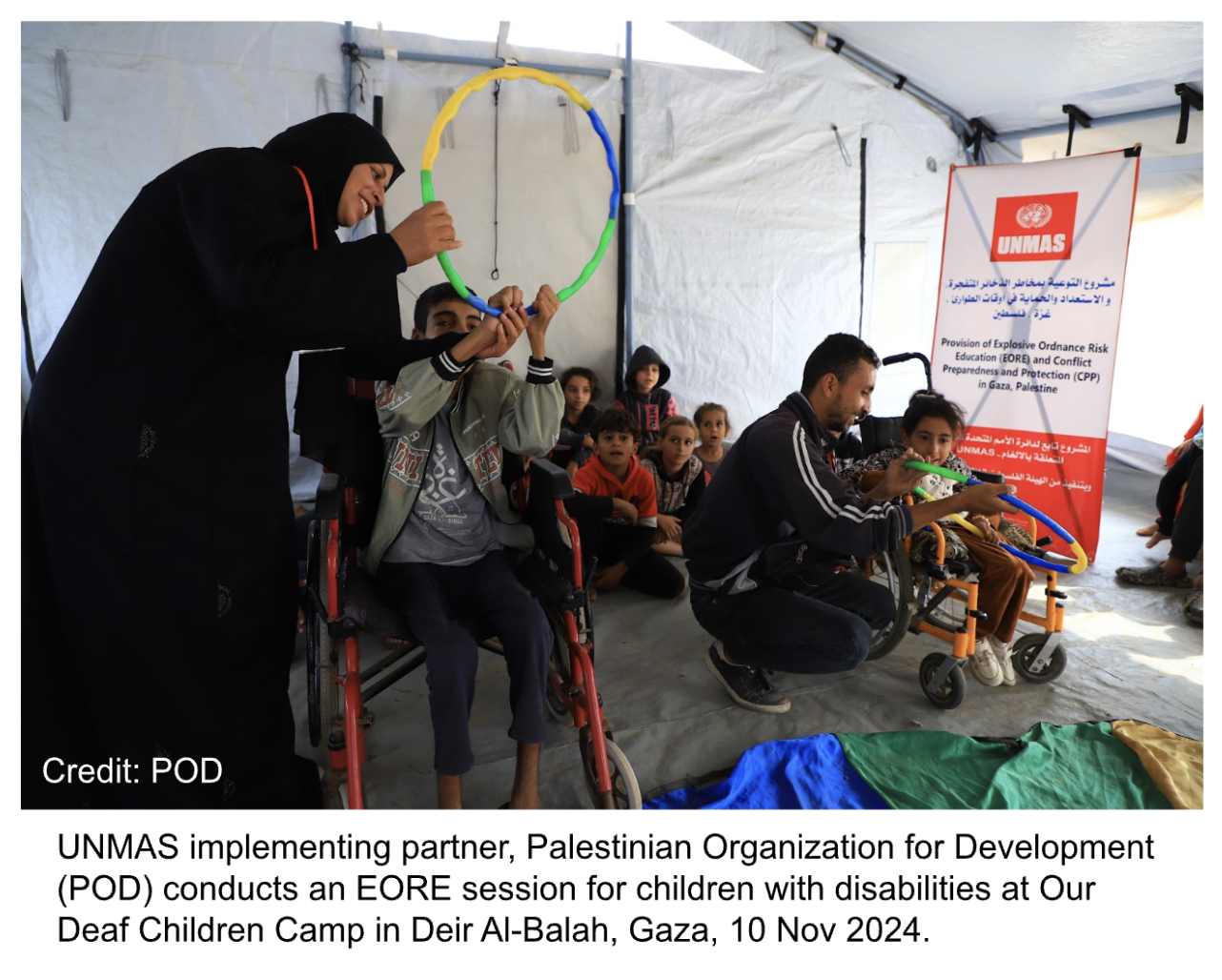 Many people with disabilities are more exposed to explosive hazards. For instance, people with limited mobility cannot always avoid rubble or unsafe ground. Those who have lost sight or hearing struggle to detect danger or follow warnings. Individuals with cognitive or psychosocial disabilities may find it difficult to interpret fast-changing, unfamiliar environments. Caregivers, already overburdened, often face impossible choices between seeking assistance or staying with a family member who depends on them.
Despite the trauma, he now warns his friends never to touch unfamiliar objects, hoping that no one else makes the same mistake.
 Explosive hazards will remain in Gaza long after the fighting stops. As communities rebuild, UNMAS is committed to ensuring that persons with disabilities and their caregivers are not only protected but also empowered to lead recovery efforts. They help shape training, inform planning, and guide the messages that keep families safe. Nimr’s words after his son was injured reflect the fear of many parents across Gaza: “If I had known this information before, my son might not be suffering today.”
After the blast: providing lifesaving support 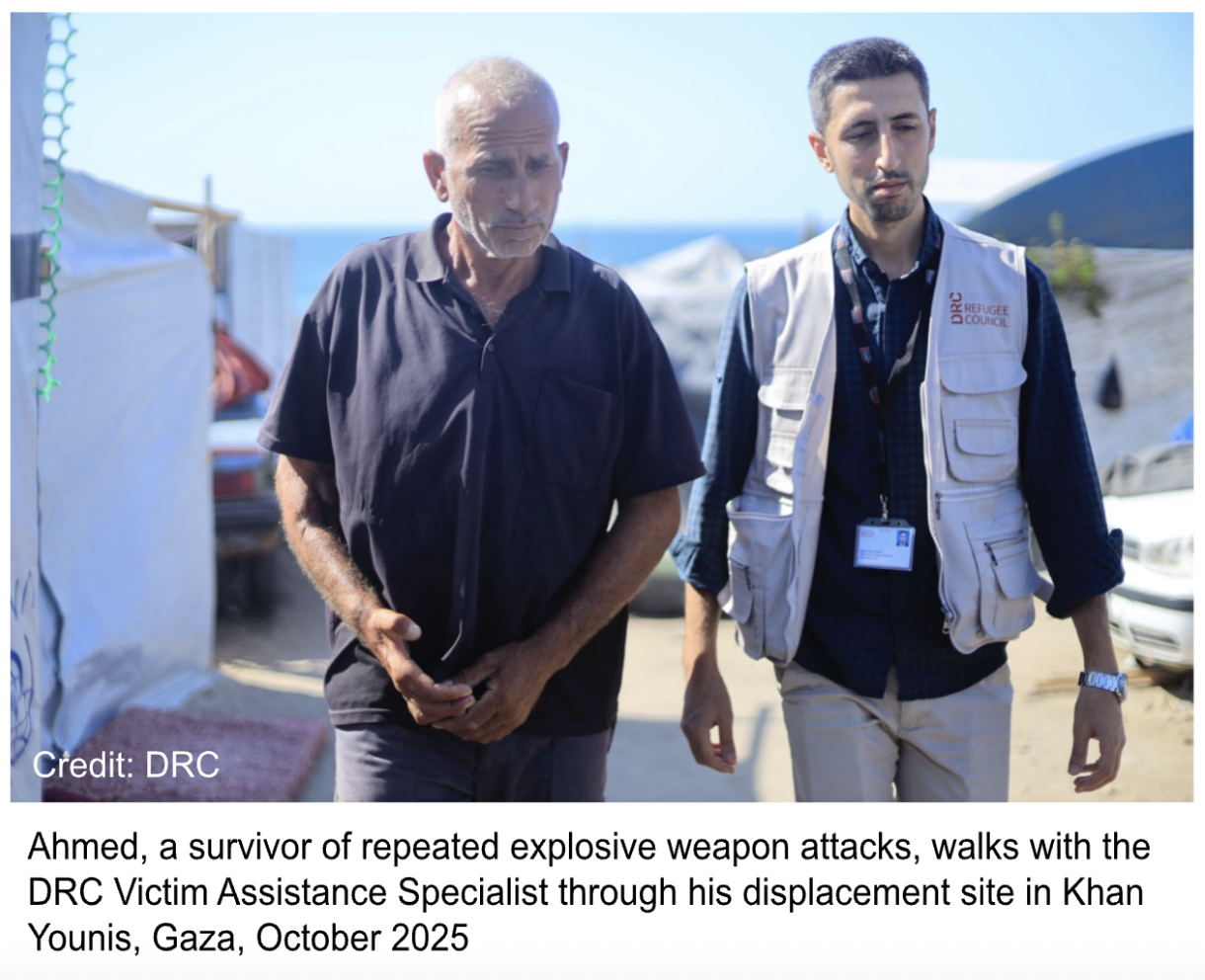
For children like Mahmoud and Moatasem, who have suffered life-changing injuries from explosive ordnance, Victim Assistance is designed to provide tailored, life-saving support to survivors from the moment that accidents are reported throughout the longer-term process of medical, psychosocial, and economic recovery. Most of the accidents reported relate to injury rather than death, leaving survivors in urgent and sustained need of care and protection. Yet, the real magnitude is still not captured. The Danish Refugee Council (DRC) recently identified 670 additional victims of Explosive Ordnance (EO), the use of Explosive Weapons in Populated Areas (EWIPA), and Small Arms and Light Weapons (SALW) through site-level household assessments across 21 displacement locations. This confirms severe under-reporting and systemic gaps in early identification and assistance.
From reporting to response
Once UNMAS receives a victim report through its online system, DRC steps in, conducting a comprehensive individual assessment, service mapping (identifying available services and how to access them), and coordinated referral to medical care, psychosocial support, shelter, and socio-economic assistance. Currently, Victim Assistance actions include case management as well as cash support, which is aligned with International Mine Action Standards, empowering those with life-changing injuries to navigate the impact of these accidents.
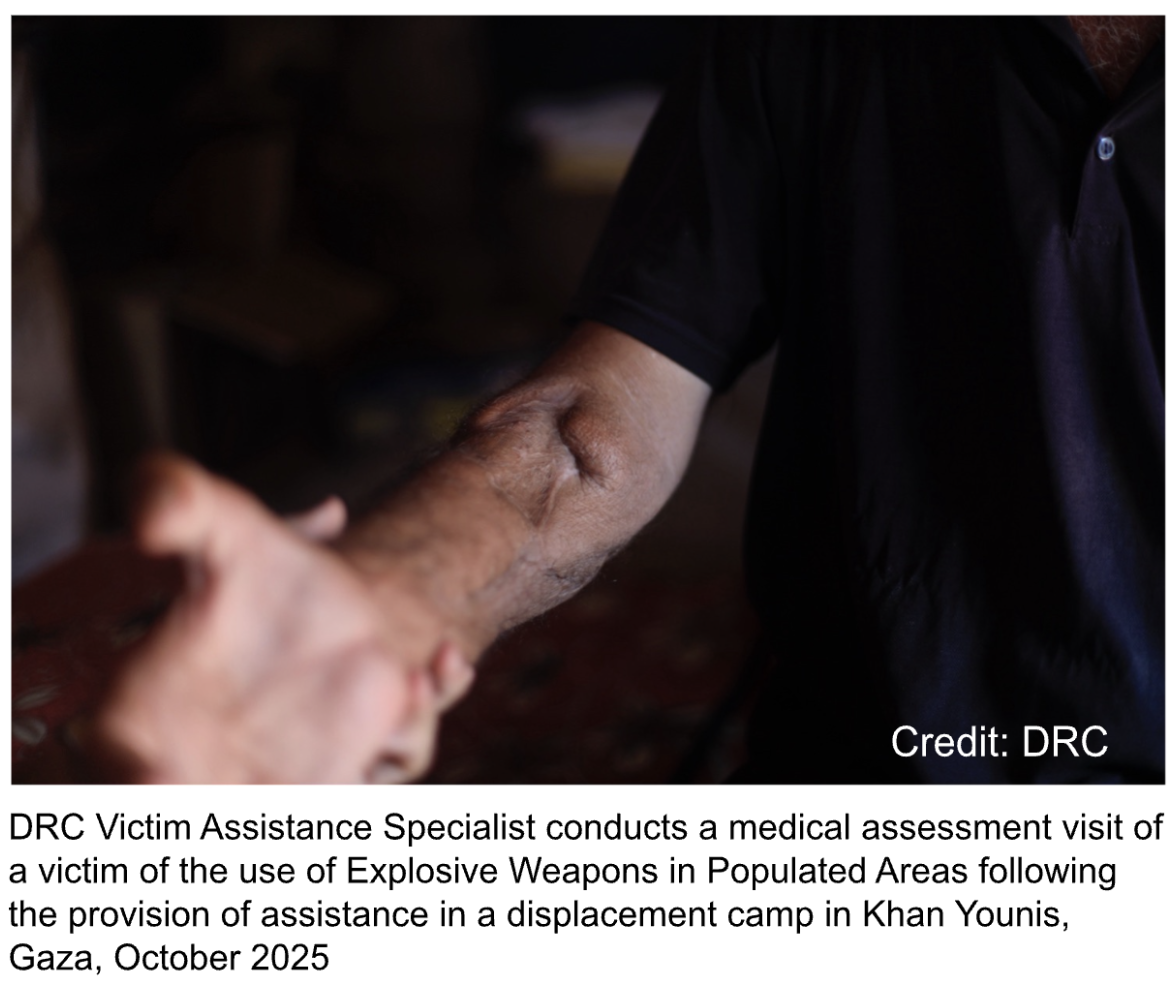 Behind each statistic is a deeply human story. Ahmed, an elderly man, was wounded multiple times: four separate conflict-related injuries between January 2024 and June 2025 have resulted in permanent functional loss of his dominant arm, embedded fragments, chronic pain, and severe economic vulnerability. Displaced with seven relatives, he now lives in an overcrowded tent and cannot access the specialized surgery he requires. He received a one-off cash grant from DRC, which he used to purchase medication, food, and hygiene supplies, as well as mattresses for his family’s temporary shelter. He has also set aside a portion of the grant to start a small income-generating activity selling basic goods, hoping to restore even a minimal level of household income. In addition, he was referred to mental health and psychosocial support services, medical follow-up options, and shelter assistance pathways. While this support was meaningful and helped the family regain temporary stability, it remains far from sufficient to meet his continuing medical, psychosocial, and economic needs.
His case reflects the humanitarian consequences of explosive weapons in densely populated areas and illustrates the gaps between commitment and reality in the implementation of the EWIPA Declaration. Victim Assistance is not only about clinical recovery—every intervention is an act of recognition, restoring dignity and agency for persons with disabilities caused by conflict. The needs of explosive ordnance victims constitute a profound human tragedy layered on top of a humanitarian catastrophe, requiring sustainable access for humanitarian actors and long-term investment to heal people and rebuild the possibility of safe civilian life.
Towards an inclusive recovery


